
Published by: Zhang Zhen | Date: August 27, 2026
Tungsten (W) and tin (Sn) are both strategically important critical metals. The Nanling Metallogenic Belt in South China hosts numerous world-class W and Sn deposits closely associated with Late Mesozoic granitic magmatism. Late Jurassic W and Sn deposits in the belt show a pronounced east-west spatial zoning pattern: W deposits are concentrated mainly in southern Jiangxi and adjacent parts of the eastern Nanling region, whereas Sn deposits are concentrated farther west, particularly near the Chenzhou-Linwu Fault Zone (Figure 1). Although this pattern has long been recognized, its origin has remained widely debated. Proposed explanations include differences in the geochemical behavior of W and Sn during magmatic-hydrothermal processes, contrasting mantle contributions to W- and Sn-related granites, and differences in the partial-melting temperatures at which the two types of granite formed. However, these mechanisms are inconsistent with some geological observations or cannot explain the full range of evidence.
To identify the most important control on W-Sn mineralization, a research team led by Professor Jinhai Yu of the School of Earth Sciences and Engineering at Nanjing University and the State Key Laboratory of Critical Earth Material Cycling and Mineral Deposits, together with Research Professor Meifu Zhou of the Institute of Geochemistry, Chinese Academy of Sciences, supervised doctoral student Lang Xia in a systematic comparison of Mesozoic granites associated with W and Sn mineralization across the Nanling region. The team found clear geochemical differences between the two granite groups (Figure 2). On the basis of detailed geochemical analyses and thermodynamic modeling, the researchers conclude that magma-source composition is the most important factor controlling the spatial zoning of W and Sn mineralization in the Nanling belt. The study, entitled “The Zonal Distribution of W- and Sn-mineralized Granites in the Nanling Metallogenic Belt, South China: The Role of Magma Sources and Differentiation,” was recently published in Economic Geology.
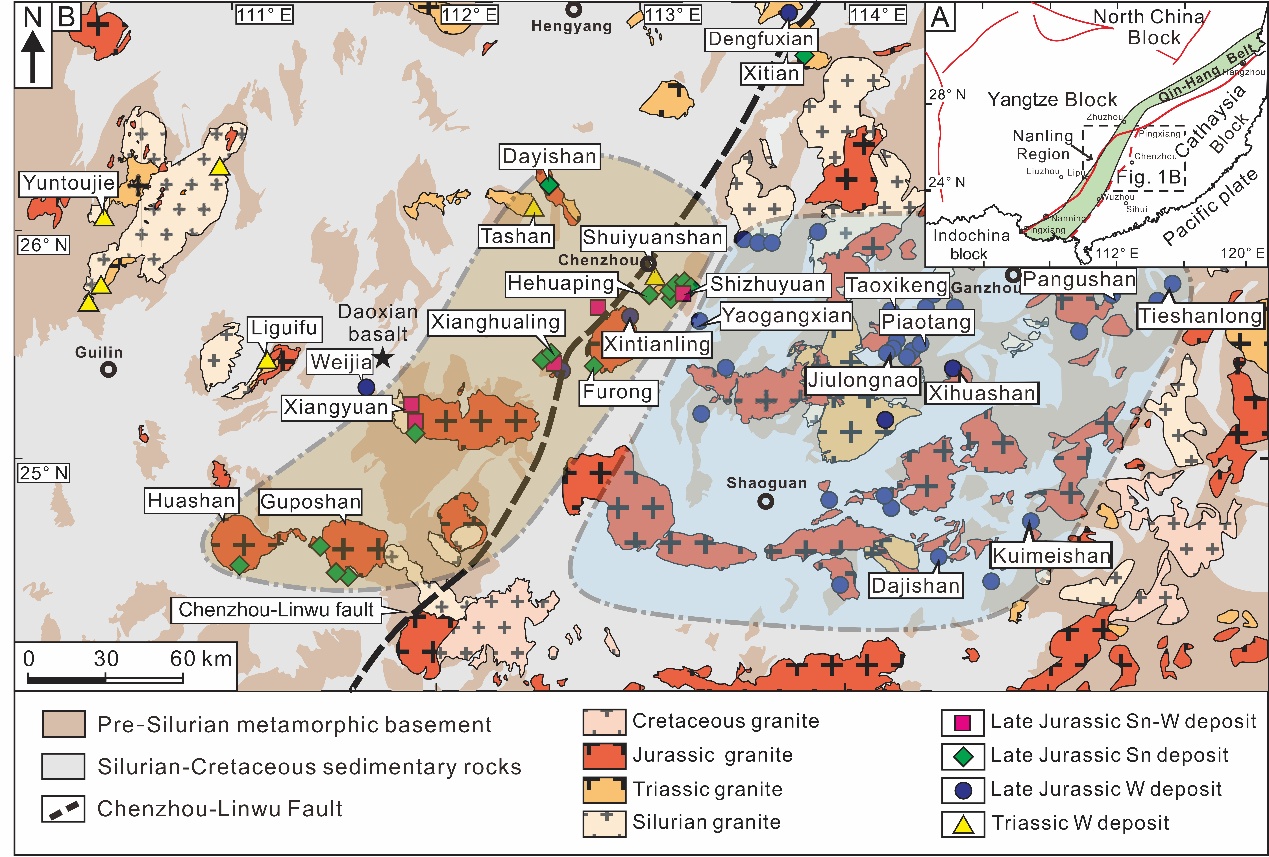
Figure 1. Spatial distribution of W-Sn deposits and related granites in the Nanling region, South China.
Statistical comparison of the geochemical data shows that Late Jurassic W-mineralized granites in the Nanling belt have distinctly low CaO/Na₂O ratios (<0.3; Figure 2a, b), whereas Sn-mineralized granites have higher ratios (>0.3). This contrast indicates that W-mineralized granites were derived from clay-rich, pelitic metasedimentary rocks, while Sn-mineralized granites originated from more sand-rich metasedimentary rocks (Sylvester, 1998). Because strong magmatic differentiation can modify CaO/Na₂O ratios, highly evolved granites do not necessarily preserve the composition of their parental magmas. Even so, the least evolved samples from the two groups retain the same systematic contrast in CaO/Na₂O (Figure 2b). More importantly, the two groups follow distinctly different compositional evolution trends (Figure 2c, d). Together, these observations indicate different parental magma compositions and, by implication, different source-rock compositions for W- and Sn-mineralized granites.
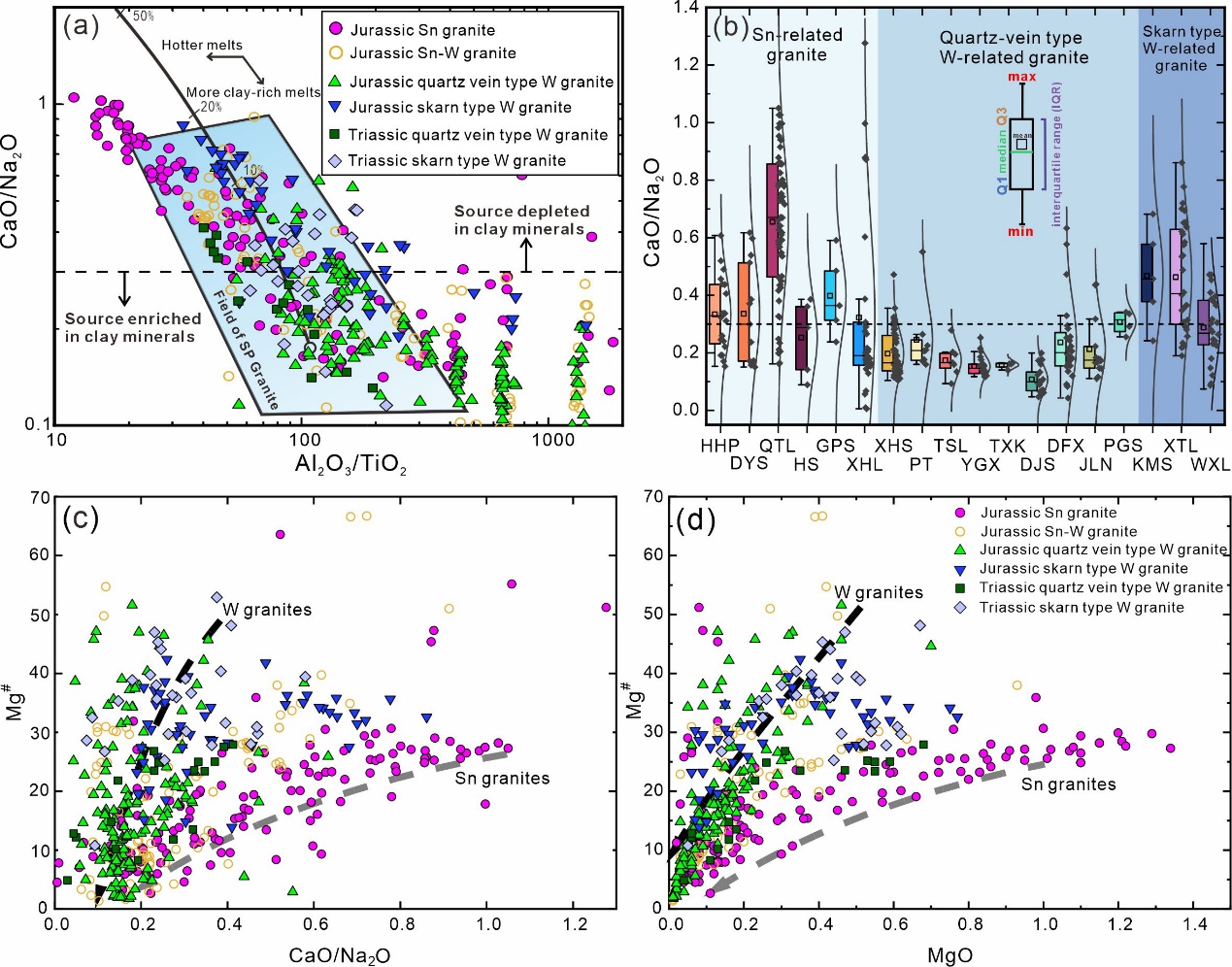
Figure 2. Geochemical characteristics of the source regions of W- and Sn-related granites.
Previous geochemical analyses of Precambrian basement rocks show that the Nanling basement is enriched in both W and Sn overall, but does not display a corresponding spatial zoning in Sn-W abundance (Yu et al., 2023). The east-W, west-Sn pattern is therefore most plausibly controlled by the lithology of the source rocks. Partial-melting simulations show that pelitic metasedimentary rocks can develop abundant muscovite during metamorphism before melting. Muscovite preferentially incorporates W and can host most of the whole-rock W budget. Muscovite-dehydration melting then releases W efficiently, producing melts with W concentrations up to about five times those of the source rock (Figure 3). By contrast, metamorphism of greywacke produces more biotite, which preferentially incorporates Sn. At higher temperatures, large-scale biotite-dehydration melting can generate Sn-rich melts containing about four times as much Sn as the source rock. The simulations also show that generation of Sn-rich magma does not require a prior episode in which a W-rich melt was extracted from the same source (Figure 3).
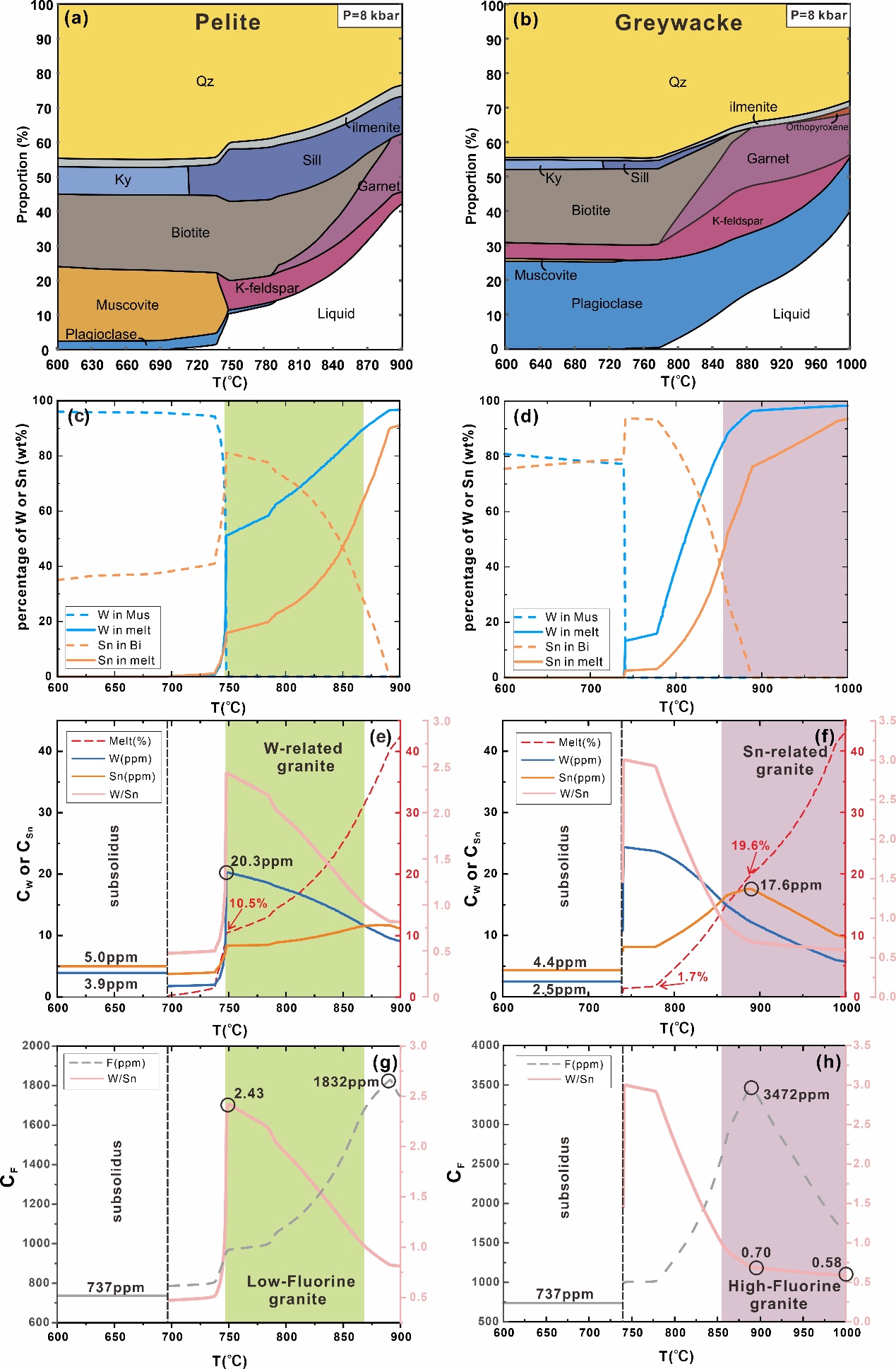
Figure 3. Phase-equilibrium modeling of pelitic and greywacke source rocks and their W-Sn behavior during partial melting.
Whole-rock geochemical characteristics of the two granite groups, including Pb, Ba, F, TiO₂, FeO, and Mg#, provide further evidence that W-mineralized granites were generated mainly by muscovite-dehydration melting, whereas Sn-mineralized granites were produced primarily by biotite-dehydration melting (Figure 4).
In addition to differences in source composition and melting conditions, the degree of magmatic differentiation further amplified the contrast between W and Sn mineralization. Compared with Sn-mineralized granites, W-mineralized granites underwent more extensive magmatic differentiation. Geobarometric estimates indicate that Sn-related magmas in the western part of the belt were generally emplaced at shallower levels and cooled more rapidly, limiting the extent of magmatic differentiation and promoting earlier fluid exsolution and fluid-rock interaction. W-related magmas in the eastern belt, in contrast, were mostly emplaced at greater depths and cooled more slowly, allowing more extensive crystal fractionation and magmatic-hydrothermal evolution and thereby further enhancing W enrichment.
By integrating the distribution of basement metamorphic rocks with differences in fault activity across the Nanling region, the study proposes a unified tectono-magmatic model. In the eastern Nanling belt, the basement is dominated by pelitic metamorphic rocks; at relatively low temperatures, muscovite-dehydration melting produced W-rich magmas, and prolonged magmatic evolution ultimately favored W mineralization. In the western Nanling belt, metagraywacke is more abundant, while contemporaneous activity along the Chenzhou-Linwu Fault Zone provided pathways for the upward transfer of mantle-derived magma and heat. This promoted higher-temperature, biotite-dehydration melting of sand-rich metamorphic source rocks and generated Sn-rich magmas. Fault activity not only facilitated the ascent of deep thermal fluids, but also contributed to shallower emplacement, relatively rapid cooling, and weaker magmatic evolution in the western belt. Differences in source composition and tectonic setting therefore acted together to decouple W and Sn and ultimately produced the region-wide east-W, west-Sn metallogenic zoning pattern.
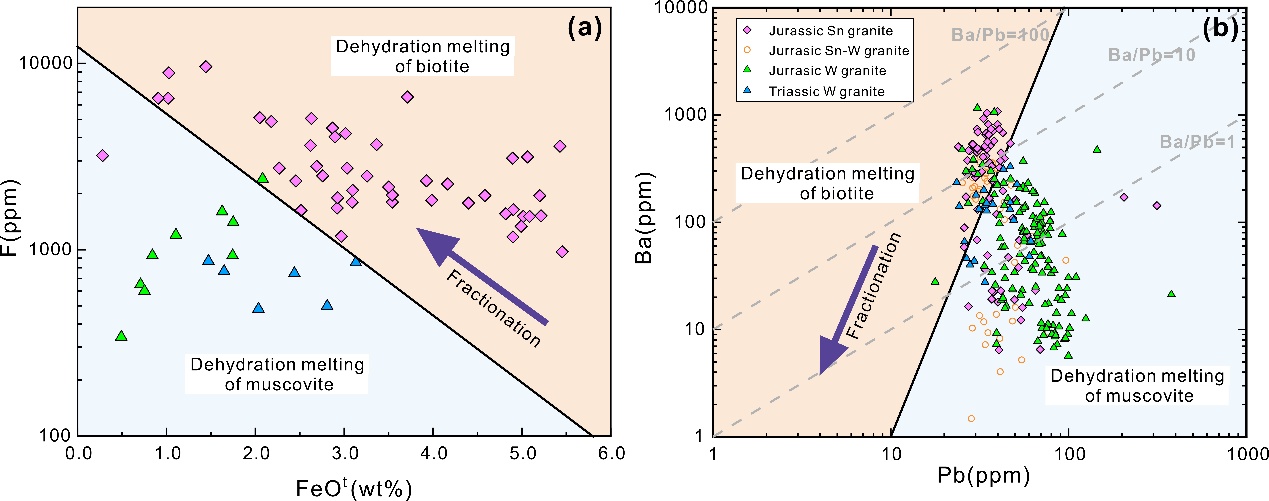
Figure 4. Whole-rock geochemical characteristics of W- and Sn-related granites.
By linking basement (source) composition, tectonic thermal conditions, and magmatic evolution within a single model of W-Sn metallogenic zoning, the study provides a new framework for understanding granite-related W and Sn mineralization in the Nanling belt and elsewhere worldwide. It also offers a theoretical basis for regional mineral exploration, highlighting favorable basement lithologies, contrasting thermal regimes, and zones of highly fractionated magmatic evolution as potential exploration targets.
Doctoral student Lang Xia is the first author of the paper, and Professor Jinhai Yu is the corresponding author. Co-authors include Research Professor Meifu Zhou of the Institute of Geochemistry, Chinese Academy of Sciences, and Associate Professor Rongqing Zhang of Nanjing University. The research was supported by the Key Project (No. 91962221) under the National Natural Science Foundation of China Major Research Program on the Dynamics of Extraordinary Enrichment and Mineralization of Strategic Critical Metals.
1.Paper information
Xia, L., Yu, J.-H., Zhou, M.-F., & Zhang, R. (2026). The Zonal Distribution of W- and Sn-mineralized Granites in the Nanling Metallogenic Belt, South China: The Role of Magma Sources and Differentiation.Economic Geology.https://doi.org/10.5382/econgeo.5252
Credits:Text and figures by Lang Xia and Jinhai Yu; reviewed by Gang Zeng. |
