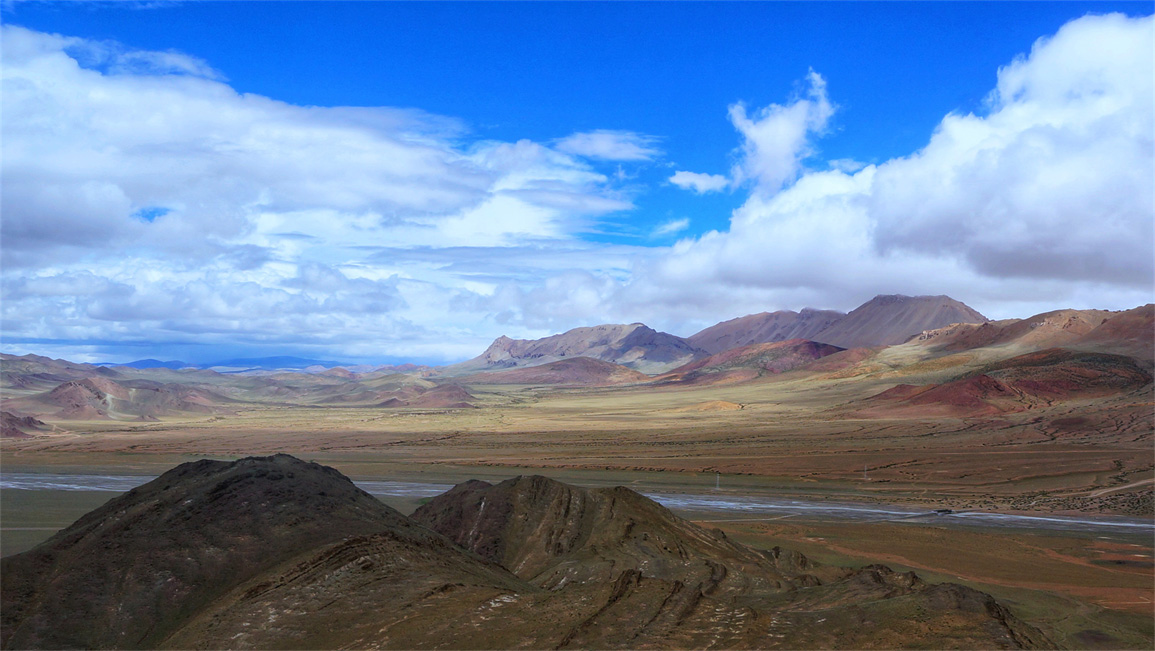
 主要关注特提斯大洋沉积与古环境变化,重建沉积微相及古水深,通过纵向时间序列的相序、平面上的岩相古地理演变来探讨古环境变化。尤其关注特提斯中、新生代浅水环境下快速气候事件(如早侏罗世Toarcian早期大洋缺氧事件(TOAE)、白垩纪大洋缺氧事件(OAEs)、大洋富氧事件(ORBs)和古新世-始新世界线极热事件(PETM)等)。利用沉积学、古生物学(有孔虫、钙质超微等)、矿物学、地球化学(微量元素、碳氧同位素、硫同位素、锶同位素等)等多学科方法,重建中新生代东特提斯印度、伊朗、西藏、新疆地区古海洋演化,精确限定重大古海洋事件与环境、生物之间的关联。
主要成员
在读博士:
蒋璟鑫(2017级)
研究方向:西藏和伊朗古新世-始新世极热事件(PETM)
在读博士:
肖开讯(2024级博士生)
研究方向:新生代大洋CCD重建与碳循环
媛(2022级直博生)
研究方向:印度洋古新世-始新世极热事件(PETM)
苏天豪(2023级直博生)
研究方向:新特提斯三叠纪古海洋事件
在读硕士:
罗梦佳(2024级)
研究方向:早寒武世古环境与成磷事件
出站博士后:
李娟(2017-2021年)
研究方向:西藏特提斯喜马拉雅古近纪沉积演化与PETM事件
毕业博士:
许艺炜 (2015-2021年) 韩中 (2013-2019年)
研究方向:拉萨地体白垩纪朗山组沉积与古地理演化 毕业论文题目:西藏特提斯喜马拉雅侏罗纪古环境演化与Toarcian早期大洋缺氧事件
毕业硕士:
张逍姬(2020级)
毕业论文:
刘昕羽(2018-2021年) 李伟(2017-2020年)
毕业论文:阿拉伯北缘Lurestan-Fars地区晚白垩世沉积演化 毕业论文题目:塔里木海早古近纪气候事件与沉积环境演化
相关成果:
Hu, X.M., Li, J., Han, Z., Li, Y.X., 2020. Two types of hyperthermal events in the Mesozoic-Cenozoic: Environmental impacts, biotic effects, and driving mechanisms. Science China Earth Sciences 63, 1041–1058.
Zhang, S.J., Hu, X.M., Han, Z., Li, J., Garzanti, E., 2018. Climatic and tectonic controls on Cretaceous-Palaeogene sea-level changes recorded in the Tarim epicontinental sea. Palaeogeography Palaeoclimatology Palaeoecology 501, 92-110.
Han, Z., Hu, X.M., Kemp, D.B., Li, J., 2018. Carbonate-platform response to the Toarcian Oceanic Anoxic Event in the southern hemisphere: Implications for climatic change and biotic platform demise. Earth and Planetary Science Letters 489, 59-71.
Hu, X.M., Wagreich, M., Sames, B., 2017. Special Topic: Cretaceous greenhouse palaeoclimate and sea-level changes. Science China-Earth Sciences 60, 1-4.
Li, J., Hu, X.M., Garzanti, E., BouDagher-Fadel, M.K., 2017. Shallow-water carbonate responses to the Paleocene-Eocene thermal maximum in the Tethyan Himalaya (southern Tibet): Tectonic and climatic implications. Palaeogeography Palaeoclimatology Palaeoecology 466, 153-165.
Han, Z., Hu, X.M., Li, J., Garzanti, E., 2016. Jurassic carbonate microfacies and relative sea-level changes in the Tethys Himalaya (southern Tibet). Palaeogeography Palaeoclimatology Palaeoecology 456, 1-20.
Li, J., Hu, X.M., Zhao, K.D., Cai, Y.F., Sun, T., 2016. Paleoceanographic evolution and chronostratigraphy of the Aptian Oceanic Anoxic Event 1a (OAE1a) to oceanic red bed 1 (ORB1) in the Gorgo a Cerbara section (central Italy). Cretaceous Research 66, 115-128.
Hu, X.M., Scott, R.W., Cai, Y.F., Wang, C.S., Melinte-Dobrinescu, M.C., 2012. Cretaceous oceanic red beds (CORBs): Different time scales and models of origin. Earth-Science Reviews 115, 217-248.
Hu, X.M., Zhao, K.D., Yilmaz, I.O., Li, Y.X., 2012. Stratigraphic transition and palaeoenvironmental changes from the Aptian oceanic anoxic event 1a (OAE1a) to the oceanic red bed 1 (ORB1) in the Yenicesihlar section, central Turkey. Cretaceous Research 38, 40-51.
Hu, X., M. Cheng, W., Ji, J., 2009, Origin of the Cretaceous Oceanic Red Beds (CORBs) as interpreted by Visible Reflectance and Inorganic Geochemistry from the Vispi Quarry Section, Central Italy, in Hu, X., Wang, C., Scott, R.W., Wagreich, M., and Jansa, L., eds., Cretaceous Oceanic Red Beds: Stratigraphy, Composition, Origins and Paleoceanographic/Paleoclimatic Significance: Tulsa, OK, SEPM Special Publication 91, p. 183-197.
Hu, X.M., Jansa, L., Wang, C.S., 2008. Upper Jurassic-Lower Cretaceous stratigraphy in south-eastern Tibet: a comparison with the western Himalayas. Cretaceous Research 29, 301-315.
Hu, X.M., Jansa, L., Sarti, M., 2006. Mid-Cretaceous oceanic red beds in the Umbria-Marche Basin, central Italy: Constraints on paleoceanography and paleoclimate. Palaeogeography Palaeoclimatology Palaeoecology 233, 163-186.
Hu, X.M., Wang, C.S., Li, X.H., Jansa, L., 2006. Upper Cretaceous oceanic red beds in southern Tibet:Lithofacies, environments and colour origin. China Science Series D Earth Sciences 49, 785-795.
胡修棉, 王成善, 李祥辉, Jansa, L., 2006. 藏南上白垩统大洋红层:岩石类型、沉积环境与颜色成因. 中国科学:地球科学, 36, 811-821
Hu, X.M., Jansa, L., Wang, C. S., Sarti, M., Bak, K., Wagreich, M., Michalik, J., Sotak, J., 2005. Upper Cretaceous oceanic red beds (CORBs) in the Tethys: occurrences, lithofacies, age, and environments. Cretaceous Research 26, 3-20.
