


From August 16 to 18, 2025, the International Workshop on Mesozoic-Palaeogene Hyperthermal Events & Fifth IGCP 739 Workshop was successfully held at the Nanjing University International Conference Center of Xianlin Campus. The conference was co-sponsored by the IUGS/UNESCO IGCP 739 Project, the National Natural Science Foundation of China Continental Evolution and Monsoon System Change, and the National Key R&D Program Deep-Time Oceanic Anoxic Events and Environmental Evolution. The conference was organized by the State Key Laboratory of Critical Earth Material Cycling and Mineral Deposits (Nanjing University), the School of Earth Sciences and Engineering of Nanjing University, and the Frontiers Science Center for Critical Earth Material Cycling (Nanjing University). Professor Xiumian Hu, from Nanjing University, served as the chairperson of the organizing committee. The conference aimed to foster interdisciplinary international collaboration, promote academic cooperation and consensus-building in the study of hyperthermal events, deepen the understanding of Earth system evolution, and respond to global climate change.
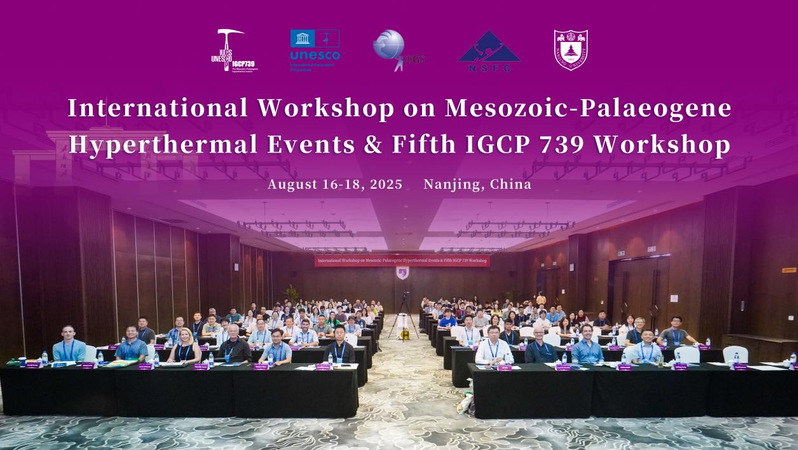
Group photo at the conference
The conference attracted over 100 experts and scholars from countries including the United States, the United Kingdom, Germany, Poland, Slovenia, New Zealand, Japan, and China. Among them, more than 20 were international scholars, and over 80 were domestic scholars. Opening addresses were delivered by Director Yuanming Zheng from Division II of the Department of Earth Sciences at the National Natural Science Foundation of China, Dean Di Wu of the Scientific Research Institute of Nanjing University, and Dean Tianyu Chen of the School of Earth Sciences and Engineering at Nanjing University.
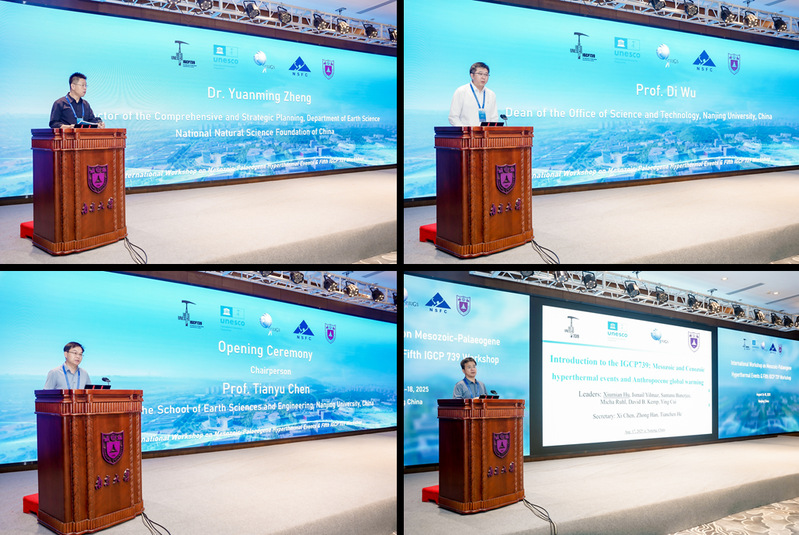
Director Yuanming Zheng from Division II of the Department of Earth Sciences at the National Natural Science Foundation of China delivered an opening address (top left). Dean Di Wu of the Scientific Research Institute of Nanjing University gave an opening speech (top right). Dean Tianyu Chen of the School of Earth Sciences and Engineering at Nanjing University presided over the opening ceremony (bottom left). Professor Xiumian Hu, Chair of the Organizing Committee, presented a report (bottom right).
Eight distinguished internationally scholars delivered invited presentations: Professor Stephen Hesselbo (University of Exeter, UK) systematically presented the latest achievements in Early Jurassic integrated stratigraphy; Professor Timothy Lyons (University of California, Riverside) elaborated on the inorganic geochemical tracer system for oceanic anoxic events; Dr. Weimu Xu (Trinity College Dublin, Ireland) reported on the response of the Norwegian continental margin to the Paleocene-Eocene Thermal Maximum; Professor Terry Isson (University of Waikato, New Zealand) provided an deep analysis of the carbon-silicon coupling mechanism during climatic events; Professor Haijun Song (presented by Li Tian) from China University of Geosciences (Wuhan) reported the latest findings on the relationship between hyperthermal events and mass extinctions; Professor Bo Wang (Nanjing Institute of Geology and Palaeontology, Chinese Academy of Sciences) introduced hydrological cycle changes during the Carnian Pluvial Episode; Professor David Kemp (China University of Geosciences, Wuhan) presented a talk on the carbon release rate during the Toarcian Oceanic Anoxia Event; Professor Paul Pearson (University College London, UK) shared insights into the Paleogene carbon cycle in Tanzania.
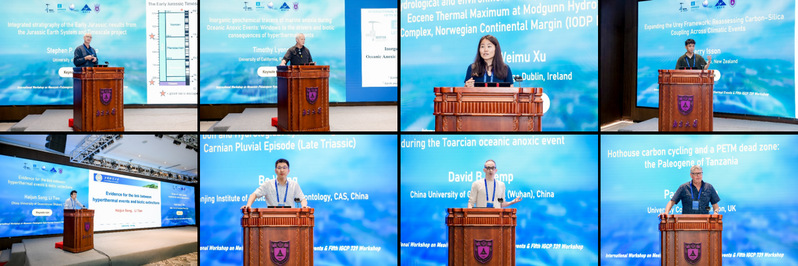
Distinguished invited speakers at the conference included: Professor Stephen P. Hesselbo (University of Exeter, UK), Professor Timothy Lyons (University of California, Riverside, USA), Assistant Professor Weimu Xu (Trinity College Dublin, Ireland), Researcher Terry Isson (University of Waikato, New Zealand), Dr. Li Tian (representing Professor Haijun Song, China University of Geosciences, Wuhan), Researcher Bo Wang (Nanjing Institute of Geology and Palaeontology, Chinese Academy of Sciences), Professor David B. Kemp (China University of Geosciences, Wuhan), and Professor Paul Pearson (University College London, UK).
The conference comprehensively showcased the latest advancements in the study of deep-time hyperthermal events through 27 oral presentations and 15 posters centered around four thematic sessions. Professor Xinyuan Zheng from the University of Minnesota, USA, delivered a presentation in the session titled Long-term climatic and environmental changes in a greenhouse world. Dr. Mariano Remirez (University of Copenhagen, Denmark) and Professor Masayuki Ikeda (the University of Tokyo, Japan) presented their work in the session on Climate and environmental changes during hyperthermal events. Researcher Yongdong Wang (Nanjing Institute of Geology and Palaeontology, Chinese Academy of Sciences), Professor Jessica Whiteside (University of San Diego, USA) and Professor Michal Krobicki (AGH University of Science and Technology, Poland) contributed to the session focusing on Biotic and carbonate platform responses to hyperthermal events. Professor Adrijan Košir (The Research Center of the Slovenian Academy of Sciences and Arts) and Assistant Professor Micha Ruhl (Trinity College Dublin, Ireland) presented their findings in the session dedicated to Carbon cycling and triggers for hyperthermal events. The insightful and engaging presentations fostered a vibrant atmosphere, garnering enthusiastic responses from faculty and students alike.
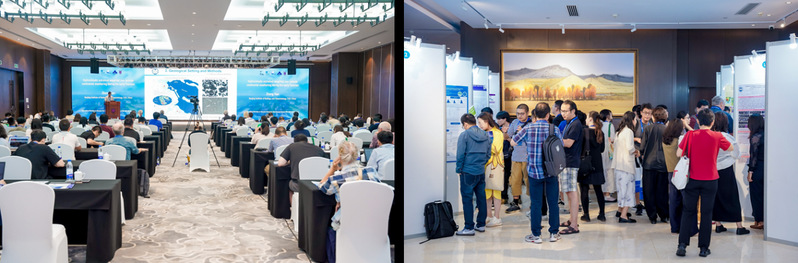
The onsite of oral and poster presentations of conference thematic sessions, with warm and lively atmosphere for discussions.
The conference organized an eight-day post-conference field field trip, covering key geological features including the Yarlung-zangbo ophiolite suite, turbidite deposits of the Xigaze forearc basin, Cretaceous cold-seep carbonates, and Mesozoic-Cenozoic geological records of typical hyperthermal events in the Tethyan Himalayas. The field trip was led by Professor Xiumian Hu, Researcher Xi Chen, Associate Researcher Zhong Han, and Dr. Jingxin Jiang, with participation from over 20 scholars from around the world. During the field trip, deep discussions were held on scientific questions such as the tectonic evolution of the Himalayas and the climatic, environmental, and biological responses during hyperthermal events.
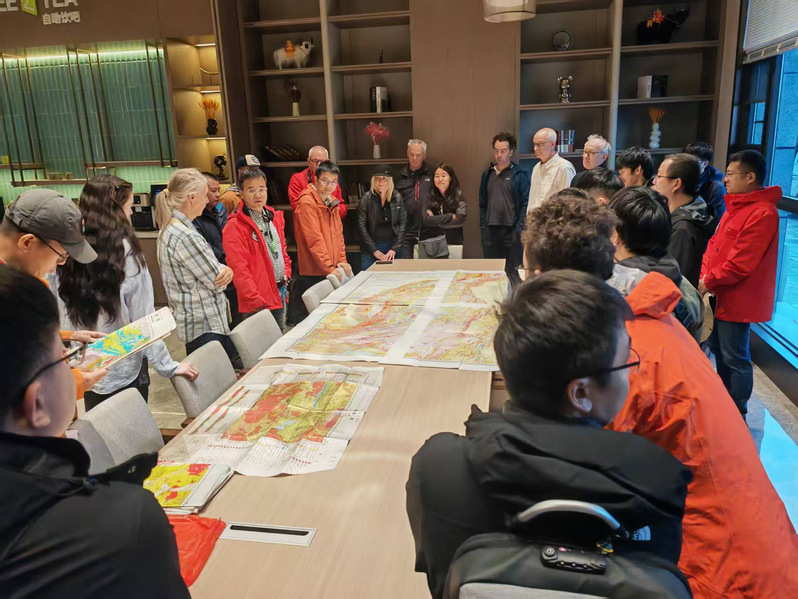
Professor Xiumian Hu made an overall arrangements for the post-workshop field trip.
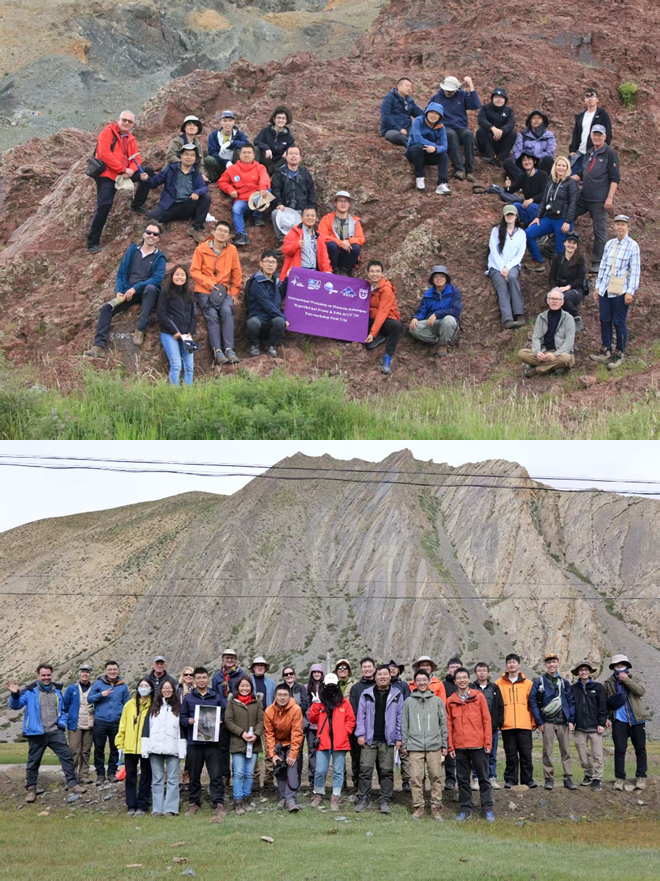
Group photo taken on the post-workshop field trip
The successful conclusion of this conference marks a significant development in the research paradigm of Earth material cycling, achieved through interdisciplinary dialogue. This further cement Nanjing University's leading international role in this field. By integrating diverse formats such as academic presentations and field investigations, the event promoted global academic exchange and collaboration in the study of hyperthermal events. It provided valuable geological insights into modern global climate change and inaugurated a new era of interdisciplinary scientific research.