
 |
|
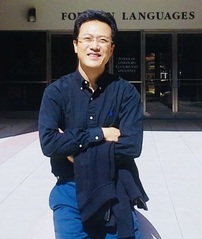
Wei Zhang
Personal ProfileEducational Background 2000.05 - 2003.05: Ph.D. Candidate in Structural Engineering, School of Civil Engineering, Southeast University. Work Experience 2024 - Present: Executive Director, Institute of Underground Space and Geological Environment, East China Geological Exploration Bureau for Non-ferrous Metals, Nanjing University. Editorial Board Memberships (International Journals) Frontiers in Earth Science Shock and Vibration Teaching 1. Undergraduate Courses: Endless Intelligent Innovation: AI on Cloud and Earth Science Innovation Practice (University-wide general education course, co-taught with Alibaba Cloud Computing Co. Ltd) Engineering Mechanics 2. Graduate Courses: Theory and Practice of Underground Engineering Educational BackgroundWork ExperienceAcademic ServiceMember, Intelligent Detection and Motion Control Technology Committee, Chinese Association for Artificial Intelligence Council Member, Engineering Risk and Insurance Research Subcommittee, Chinese Society of Civil Engineering Member, Technical Committee, Intelligent Monitoring Technology Innovation Base for Urban Underground Space Development, Chinese Geology Society Technical Committee Member, Intelligent Construction Subcommittee, China International Technology Promotion Association Member, Technical Committee, Urban Geology Safety Risk Prevention and Control Engineering Technology Innovation Center, Jiangsu Provincial Department of Natural Resources Member, Technical Committee, Research Center for Urban Underground Space Development and Safety Protection Engineering, Jiangsu Province Member, Expert Committee, Jiangsu Provincial Renewable Energy Industry Association Executive Director, Jiangsu Province Underground Space Society Director, Jiangsu Provincial Renewable Energy Association Secretary-General, Carbon Neutrality Subcommittee, Jiangsu Province Underground Space Society Vice Chairperson, Education Subcommittee, Jiangsu Province Underground Space Society Member, Operations and Maintenance Professional Committee, Jiangsu Province Underground Space Society Member, Geotechnical Foundation Professional Committee, Jiangsu Province Civil Engineering Society Member, Expert Science Communication Lecture Team, Jiangsu Province Science Communication Expert, Jiangsu Province Underground Space Society Science Communication Expert, Jiangsu Province Youth Science and Technology Education Association Expert for the Science Popularization Reports into Schools Program, Nanjing City Research IntersetsResearch Interests Hydrogen Energy and Geological Hydrogen Storage / Artificial Intelligence / Data Science / Intelligent Sensing / Energy Internet (AI+ Energy/Resources/Environment/Disasters)
Hydrogen energy is not only a clean energy source and serves as an energy carrier that connects key sectors of the national economy, such as renewable energy, industry, transportation, and electricity. It plays a dual role as a carbon reduction hub and a multi-energy integration link in the process of China’s energy transition. Meanwhile, green hydrogen can effectively support grid energy storage and peak shaving on the energy supply side, enhancing the ability to absorb wind and solar renewable energy. Due to the increasing core value of hydrogen energy, geological hydrogen storage has become a frontier field in geosciences and geotechnical engineering in recent years. In 2007, Turing Award winner Jim Gray classified scientific research into four paradigms. The first three paradigms are experimental science, represented by the study of natural phenomena; theoretical science, represented by Newton’s laws and Maxwell's equations; and computational science, which simulates complex phenomena. The fourth paradigm, known as The Fourth Paradigm, is data-intensive science. As a novel research paradigm, data-intensive science abandons the pursuit of logical causal relationships and instead focuses on correlations to capture the trends of phenomena. Data-intensive science emerged with the rapid development of high-performance computing, intelligent algorithms, and other technologies, driven by vast amounts of data. It represents a shift from hypothesis-driven research to data-driven scientific exploration. The next generation of artificial intelligence (AI), based on bio-inspired neural networks, has led to the development of AI-driven scientific research (AI for Science, AI4S), which enhances the ability to overcome the curse of dimensionality and empowers significant discoveries in science and technology. This new scientific paradigm is referred to as the Fifth Paradigm. The Fifth Paradigm focuses on virtual-physical interaction and parallel-driven AI technologies, enabling autonomous learning of human-like intelligence through bidirectional data-knowledge-driven large language models, and driving scientific innovation through model inference. Our research group focuses on the integration of the Fourth and Fifth Paradigms, known as Data-Intelligence Fusion. Based on advanced sensing technologies, we are dedicated to achieving breakthroughs in geological hydrogen storage, hydrogen transport, and the safety of underground spaces and geological environments, leveraging new techniques in data science and artificial intelligence. Research Directions 1. Intelligent-Digital Integration of Underground Space 1)Digital imaging of pores and fractures, and AI4S-driven characterization and modeling. 2)Precise forecasting and early warning of geological hazards induced by underground engineering. 3)Intelligent sensing of karst collapse. This research direction focuses on key scientific issues in multi-scale underground space development and utilization. It integrates IoT, data science, artificial intelligence, intelligent sensing engineering, and smart science and technology to conduct research on sensing, integration, characterization, simulation, prediction, and early warning. Career prospects for graduates include universities and research institutes, government agencies, central and state-owned enterprises, public institutions, and leading technology companies.
2. Energy Internet Engineering Geology 1) Geological suitability assessment and safety regulation for large-scale hydrogen storage in salt caverns. 2) Safety risk perception and prevention for buried hydrogen pipelines. 3) Early warning of safety risks in deep-energy development and storage.
The Energy Internet is a novel energy system centered on the power grid, integrating renewable energy, information and communication technologies, and smart science and technology. It enables deep collaboration among distributed energy, energy storage facilities, and smart grids. This research direction addresses critical engineering geology and safety issues in large-scale hydrogen storage and deep-energy development and storage, aligning with national strategic opportunities for green energy transition. Career prospects for graduates include universities and research institutes, government agencies, central and state-owned enterprises, public institutions, and leading energy companies. TeachingResearch ProjectsOngoing Projects 1. National Natural Science Foundation of China (NSFC) General Program: Research on the Hydro-dynamic Coupling Mechanism of Karst Collapse and Data-Knowledge Dual-Drive Early Warning Model (Project No. 42577218, Principal Investigator). 2. National Key R&D Program of China: Development of Precision Risk Prevention and Control Technology and Equipment for Deep Karst Collapse (2022YFC3003303, Topic Leader). 3. Jiangsu Province International Science and Technology Cooperation Project: Cooperative Development of an Underground Chemical Pipeline Leakage Sensing and Early Warning System (BZ2023056, Principal Investigator). 4. Jiangsu Province Frontier Technology Research and Development Program: Key Technologies for Large-Scale Hydrogen Storage in Salt Caverns (BF2024056, Main Participant). 5. Jiangsu Province Frontier Technology Research and Development Program: Key Technologies for Safe Hydrogen and Hydrogen-Blended Natural Gas Pipeline Transport (BF2024057, Main Participant). 6. Jiangsu Province Key R&D Program: Key Technologies for Distributed Flexible Sensing and Intelligent Early Warning Systems Induced by Shield Tunnel Excavation (BE2022156, Sub-project Leader). 7. Jiangsu Province Key R&D Program Sub-project: Research on Multi-source Information Perception and Fusion for Long-distance Tunnel Diseases (Principal Investigator). 8. Engineering Research Center of Deep Zero-Carbon and Negative-Carbon Technologies in Mining Areas, Ministry of Education Open Fund: Research on Distributed Sensing and Intelligent Early Warning Systems for Gas Leakage During Operation of Salt Cavern Natural Gas Storage (Principal Investigator). 9. Jiangsu Province Geological Engineering Environmental Intelligent Monitoring Engineering Research Center Open Fund: Research on Distributed Sensing and Intelligent Early Warning Technologies for Urban Karst Collapse (Principal Investigator). 10. Nanjing University AI & AI for Science Youth Project: Research on Generative Representation of Coral Reef Stratigraphy and its Geochemical Evolution Mechanism Based on KAN-DDPM (Core Participant). 11. Horizontal Research Project: Health Status Monitoring and Evaluation of Suzhou Dushu Lake Tunnel (Principal Investigator). Completed Projects 1. National Natural Science Foundation of China (NSFC) General Program: Research on Distributed Flexible Sensing and Intelligent Early Warning for Urban Karst Ground Collapse (42077232, Principal Investigator). 2. NSFC Youth Program: Research on the Response and Engineering Property Evolution of Soft Clay Surrounding the Yuejiang Highway Tunnel under Vehicle Loads and Temperature (Principal Investigator). 3. National Key R&D Program Sub-project: Research on Information Fusion and Integrated Monitoring and Early Warning Technologies for Landslides (Topic Leader). 4. Ministry of Education Doctoral Fund Project: Quantitative Study on the Thermodynamic Evolution of Engineering Properties of Soft Clay Surrounding Yuejiang Highway Tunnel (Principal Investigator). 5. Jiangsu Province Natural Science Foundation: Simulation and Experimental Study on the Evolution Mechanism of Collapsible Soil Landslides Using Material Point Method (Principal Investigator). 6. Jiangsu Province Natural Science Foundation: Multi-scale Study on the Evolution of Engineering Properties of Anisotropic Sands in Subway Vibration Environments (Principal Investigator). 7. Jiangsu Provincial Science and Technology Department Industry-Academia-Research Joint Research Project: Development of Intelligent Management System for Urban Tunnels and Bridges Based on Sensor Networks (Principal Investigator). 8. Frontier Scientific Center for Critical Earth Material Cycles Talent Team Project: Research on the Stability and Carbon Sequestration Capacity of Filling Nickel Tailings in Deep Mining Void Strata (Principal Investigator). 9. Suzhou City Science and Technology Plan - Basic Research Project: Development and Application of Intelligent Sensor Networks for Monitoring Subway Vibration and Noise Pollution (Principal Investigator). 10. Suzhou City Science and Technology Plan Project: Development and Application of Wireless Underground Sensor Networks for Large-Scale Earth Slide Early Warning (Principal Investigator). 11. Suzhou City Science and Technology Plan Project: Development and Application of Graphene-Based Flexible Conductive Films for Ground Collapse Distributed Monitoring (SYG202132, Principal Investigator). 12. Nanjing Urban Construction Group Cooperative Horizontal Project: Health Status Monitoring and Evaluation of Nanjing Yangtze River Tunnel (Principal Investigator). 13. Suzhou Rail Transit Group Research Project: Fire Resistance Limit Test of the Cover Slab of Taiping Vehicle Depot of Suzhou Metro Line 2 (Principal Investigator). 14. China Electric Power Research Institute Cooperative Project: Coal Seam Mining Signal Analysis and Response Model Research (Principal Investigator). 15. Army Engineering University National Defense Engineering College Cooperative Project: Multi-scale Characterization and Permeability Characteristics of Pore-Fissure Structures in Island Limestone Reefs (Principal Investigator). Publications2025 [1] Dou Chen,Wei Zhang*,Chenghao Li,Linjian Ma,Xiaoqing Shi,Haiyang Li,Honghu Zhu.Randomly generating realistic calcareous sand for directional seepage simulation using deep convolutional generative adversarial networks. Journal of Rock Mechanics and Geotechnical Engineering, 2025, https://doi.org/10.1016/j.jrmge.2025.01.055. [2] Feng Tian, Wei Zhang*,Hong-Hu Zhu*,Cui Wang,Feng-Nian Chang,Hou-Zhi Li,Dao-Yuan Tan. Multi-temporal InSAR-based landslide susceptibility mapping of Fengjie County, Three Gorges Reservoir Area, China. Journal of Rock Mechanics and Geotechnical Engineering, 2025, https://doi.org/10.1016/j.jrmge.2025.01.012. [3] Jia Wang,Hong-Hu Zhu,Xiao Ye,Feng Tian,Wei Zhang,Hou-Zhi Li,Hua Fu Pei.Shear strain prediction of reservoir landslide based on FBG monitoring and bragging-MLP algorithm. Bulletin of Engineering Geology and the Environment, 2025,84: 67. [4] Siqi Zhang,Daoyuan Tan,Honghu Zhu,Wei Zhang.Molecular dynamic simulation on the hydrogen wettability of caprock: Considering effect of mineralogy,pressure,temperature and salinity. International Journal of Hydrogen Energy, 2025,109:367-382. [5] Tiancheng Xie,Honghu Zhu,Youkou Dong,Mingliang Zhou,Bin Wang,Wei Zhang,Jidong Zhao.Geo-interface modeling with material point method: A review. Journal of Rock Mechanics and Geotechnical Engineering, 2025,https://doi.org/10.1016/j.jrmge.2025.04.001. [6] Bing Wu,Hong-Hu Zhu,Deyang Wang,Cui Wang,Wei Zhang,Allessandro Pasuto,Filippo Catani.Ground-breathing effect of the Loess Plateau: Insights from the Chinese 72 pentads.Journal of Rock Mechanics and Geotechnical Engineering,2025,https://doi.org/10.1016/j.jrmge.2025.05.001. [7] Jia Wang,Hong-Hu Zhu,Wei Zhang,Dao-Yuan Tan,Alessandro Pasutu.Enhancing landslide displacement prediction using a spatio-tempporal deep learning model with interpretable features.Journal of Geophysical Research: Machine Learning and Computation.2,e2025JH000592. [8] Dao-Yuan Tan,Zhen-Yu Tang,Zhen-Rui Yan,Jing Wang,Wei Zhang,Jing-Wu Huang,Peng Wang,Zhiguo Yuan,Huan-Feng Duan,Bin Shi,Hong-Hu Zhu. Real-time monitoring of water states in large-diameter aqueducts-learning from distributed acoustic sensing signals.Communications Engineering,2025,4: 156. [9] Wen-Han Xu,Wei Zhang*,Zhe-Wei Deng,Cheng-Hua Xu,Hua-Ping Ding,Hong-Hu Zhu.Ground collapse early warning driven by edge-based data assimilation and adaptive threshold using quasi-distributed flexible conductive film sensor array. Measurement,2025,118764. [10] Heng Zhang, Wei Zhang*, Wenhan Xu, Honghu Zhu, Yehui Shi, Helan Cheng. Detailed Characterization of Pore Structure Evolution of Nanjing Fine Sand During Drying Process.* Journal of Engineering Geology, 2025, 33(1): 74-85. [11] Xiaoye Ye, Honghu Zhu, Kun Tian, Houzhi Li, Wei Zhang, Gang Cheng. Scientific Observation and Early Warning of Mega-Reservoir Landslides from the Perspective of Emergency Management. Journal of Safety Science and Technology, 2025, 35(3): 221-231. [12] Haiyang Li, Wei Zhang, Wenhan Xu, Fuchen Hu, Helan Cheng, Honghu Zhu. Particle Structure Evolution Characteristics of Nanjing Fine Sand During Triaxial Compression. Journal of Geological University, 2025, 31(4): 385-396. 2024 [1] Long-chuan Deng, Wei Zhang*, Lu Deng, Ye-hui Shi, Jian-jun Zi, Xu He, Hong-hu Zhu*. Forecasting and early warning of shield tunnelling-induced ground collapse in rock-soil interface mixed ground using multivariate data fusion and Catastrophe Theory. Engineering Geology, 2024, 107548. [2] Xiao Ye, Hong-Hu Zhu*, Feng-Nian Chang, Tian-Cheng Chang, Feng Tian, Wei Zhang*, Filippo Catani. Revisiting spatiotemporal evolution process and mechanism of a giant reservoir landslide during weather extremes. Engineering Geology. 2024, 332 107480. [3] Xiao Ye, Hong-Hu Zhu*,Bing Wu, Feng Tian, Wei Zhang*, Xie Hu, Luca Schenato, Alessandro Pasuto, Filippo Catani. Near-surface soil hydrothermal response feedbacks landslide activity and mechnism. Engineering Geology. 2024, 107690. [4] Jianjun Zi,Tao Liu,Wei Zhang*,Xiaohua Pan,Hu Ji,Honghu Zhu.Quantitatively characterizing sandy soil structure altered by MICP using multi-level thresholding segmentation algorithm.Journal of Rock Mechanics and Geotechnical Engineering, 2024,16(10): 4285-4299. [5] Hong-Hu Zhu, Jing Wang, Wei Zhang*, Wei-bin Suo, Bin shi, Assaf Klar. Failure analyses of open-ended pre-stressed high-strengh concrete pile during driving: insights from distributed fiber optic sensing. Acta Geotechnica. 2024, https://doi.org/10.1007/s11440-024-02255-6. [6] Xiao Ye, Honghu Zhu*,Jia Wang, Wei Zhang*, Luca Schenato, Alessandro Pasuto, Filippo Catani. Towards hydrometeorological thresholds of reservoir-induced landslide from subsurface strain observations. Science China, Technological Sciences, 2024, 67, https://doi.org/10.1007/s11431-023-2656-3. [7] Hong-Hu Zhu, Xiao Ye, Hua-Fu Pei, Wei Zhang, Gang Cheng, Zi-li Li.Probing multi-physical process and deformation mechanism of a large-scale landslide using intergrated dual-source monitoring.Geoscience Frontiers.2024,15: 101773. [8] Fengnian Chang, Shaochun Dong, Hongwei Yin, Xiao Ye, Wei Zhang, Honghu Zhu. Temporal stacking of sub-pixel offset tracking for monitoring slow-moving landslides in vegetated terrain. Landslides, 2024, 21:1255-1271. [9] Fengnian Chang, Shaochun Dong, Hongwei Yin, Xiao Ye, Zhenyun Wu, Wei Zhang, Honghu Zhu. Three-dimensional displacement time series prediction of a north-facing reservoir landslide powered by InSAR and machine learning. Journal of Rock Mechanics and Geotechnical Engineering, 2025, 17(8). [10] Fengnian Chang, Shaochun Dong, Hongwei Yin, Xiao Ye, Zhenyun Wu, Wei Zhang, Honghu Zhu.Unravelling long-term spatiotemporal deformation and hydrological triggers of slow-moving reservoir landslides with multi-platform SAR data. International Journal of Applied Earth Observation and Geoinformation. 2024,135:104301. 2023 [1] Axiang Chen,Yu Liao,Hao Cai,Xun Guo,Boyuan Zhang,Bencheng Lin,Wei Zhang,Ling Wei,Yan Tong.Experimental study on 3D source loacalization in indoor environments with weak airflow based on two bionic swarm intelligence algorithms.Building and Environment.2023, 230:110020. [2] Yu Liao,Axiang Chen,Hao Cai,Jingyu Lu,Wei Zhang,Bencheng Lin,Xun Guo,Ling Wei,Yan Tong. An experimental study on locating time-varying pollutant sources in a dynamic indoor environment with mechanical ventilation based on multi-robot cooperation. Journal of Building Engineering.2023,67:105962. [3] Yuxin Gao, Honghu Zhu,Liang Qiao, Xifeng Liu, Chao Wei, Wei Zhang. Feasibility study on sinkhole monitoring with fiber optic strain sensing nerves.Journal of Rock Mechanics and Geotechnical Engineering.2023. [4] Tian-Cheng Xie,Hong-Hu Zhu,Chun-Xin Zhang,Wei Zhang.Modeling strip footings on slopes using the material point method. Bulletin of Engineering Geology and the Environment.2023 82:99. [5] Yu-Xin Gao,Hong-Hu Zhu,Chao Wei,Jing Wang,Wei Zhang.Performance evaluation of distributed strain sensing nerves for monitoring ground collapse: A laboratory study. Measurement.2023 217: 113100. [6] Hong-hu Zhu, Tian-cheng Xie, Wei Zhang, Sanjay Shukla. Numerical simulation of a strip footing on the soil slope with a buried pipe using the Material Point Method. Journal of Geomechanis,ASCE. 2023 23(11):04023190. [7] Tian-Cheng Xie, Hong-Hu Zhu, Chun-Xin Zhang, Wei Liu, Dao-Yuan Tan, Wei Zhang. Modelling pipe-soil interaction under lateral movement using material point method. Journal of Pipeline Systmes Engineering and Practice. 2024, 15(1): 04023058. [8] Bin Shi, Honghu Zhu, Chengcheng Zhang, Mengya Sun, Wei Zhang, Taiyin Zhang. Geohazard Perception and Application in Geotechnical Bodies. Science China: Technological Sciences, 2023. [9] Linjian Ma, Huachao Liu, Wei Zhang, Qi Li, Honghu Zhu, Jiawen Wu. Macro- and Micro-Scale Study of Physical and Mechanical Properties of Coral Reef Limestone at Different Burial Depths. Journal of Geological Sciences in Universities, 2023, 29(6): 471-478. [10] Wangyan He, Wei Zhang*, Houzhi Li, Bo Pan, Lu Deng, Honghu Zhu, Bin Shi. Knowledge Graph Optimized Kalman Filtering for Predicting Reservoir Slope Displacement.* Journal of Geological Sciences in Universities, 2023, 29(3): 372-381. 2022 [1] Ke Liao, Wei Zhang*, Hong-hu Zhu, Qin Zhang, Bin Shi, Jing-tao Wang, Wen-tao Xu. Forecasting reservoir-induced landslide deformation using genetic algorithm enhanced multivariate Taylor series Kalman filter. Bulletin of Engineering Geology and the Environment.2022 81:104. [2] Nanfang Zhang, Wei Zhang*, Ke Liao, Hong-hu Zhu, Qi Li, Jingtao Wang. Deformation prediction of reservior landslides based on a Bayesian opotimized random forest-combined Kalman filter. Environmental Earth Scineces. 2022 81:197. [3] Hao-jie Li, Hong-hu Zhu, Chun-xin Zhang, Wei Zhang. Modelling and analysis failure modes of buried pipelines perpendicularly crossing landslide boundaries. Soil Dynamics and Earthquake Engineering. 2022 162: 107447. [4] Yuxin Gao, Honghu Zhu, Chunxin Zhang, Wei Liu, Jing Wang, Wei Zhang. Simulation Study of Anchor Plate Uplift Using the Three-Dimensional Material Point Method in Sandy Soil. Journal of Geotechnical Engineering, 2022, 44(2): 295-304. [5] Chao Wei, Honghu Zhu, Yuxin Gao, Jing Wang, Wei Zhang, Bin Shi. Experimental Study on the Distributed Optical Fiber Sensing Model for Ground Subsidence. Geotechnical Mechanics, 2022, 43(9): 10.16285/j.rsm.2021.1992. [6] Wentao Xu, Xiaozhao Li, Yangsong Zhang, Honghu Zhu, Wei Zhang, Chengqiang Xuan. Fine Identification and Characterization of Rock Mass Structural Surfaces Based on Photogrammetry System and Its Application. Journal of Surveying and Mapping, 2022, 51(10): 2093-2106. [7] Jia Wang, Honghu Zhu, Xiaoye Ye, Houzhi Li, Wei Zhang, Gang Cheng. Prediction of Reservoir Landslide Displacement Considering Time-Delay Effects—A Case Study of Xinpu Landslide. Journal of Engineering Geology, 2022, 30(5): 1609-1619. 2021 [1] Jia-jie Shi, Wei Zhang*, Wei Wang, Yun-han Sun, Chuan-yi Xu, Hong-hu Zhu, Zheng-xing Sun. Randomly generating three-dimensional realistic schistous sand particles using deep learning: Variational autoencoder implementation. Engineering Geology, 2021, 291 106235. [2] Peng Zhao, Xiaozhao Li*, Wei Zhang*, Zhiyong Xiong, Wentao Xu, Jialiang Dai, Longchuan Deng. System dynamics: A new approach for the evaluation of urban underground resource integrated development. Tunnelling and Underground Space Technology, 2022, 104213. [3] Chunxin Zhang, Honghu Zhu, Wei Zhang, Haojie Li, Wei Liu. Modeling uplift failure of pipes buried in sand using material point method. Tunnelling and Underground Space Technology, 2022, 119: 104203. [4] Yunxiao Xin, Xiaozhao Li, Wei Zhang, Qi Wang. Characterizing the deep pumping-induced subsidence against metro tunnel using vertically distributed fiber-optic sensing. Environmental Earth Sciences, 2021, 80: 762. [5] Chunxin Zhang, Honghu Zhu, Haojie Li, Wei Zhang, Chun Liu. Material Point Method Simulation of Sand Soil Deformation and Failure Around Tunnels Under Support Pressure Control. Journal of Zhejiang University (Engineering Edition), 2021, 55(7): 1317-1326. 2019-2020 [1] Wei Zhang*, Rui Xiao, Bin Shi, Hong-hu Zhu*, Yi-jie Sun. Forecasting slope deformation field using correlated grey model updated with time correction factor and background value optimization. Engineering Geology, 260 (2019) 105215. [2] Chen-dong Li, Wei Zhang*, Xiao-min Wang, Bo Pan, Hong-hu Zhu, Billie F. Spencer Jr. Modeling dynamic responses of a cross-river road shield tunnel under stochastic vehicle loads. Tunnelling and Underground Space Technology, 2020,102, 103432. [3] Chen-dong Li, Wei Zhang*, Hong-hu Zhu, Peng Wang, Jia-tao Ren, Billie F. Spencer. Fast vibration characteristics analysis of an underwater shield tunnel using the accelerometer network enhanced by edge computing. Measurement, 2019 141: 52-61. [4] Butao Shi, Yun Zhang*, Wei Zhang*. Run-out of the 2015 Shenzhen liandslide using the material point method with the softening model[J]. Bulletin of Engineering Geology and the Environment. 2019 78: 1225-1236. [5] Han Wu, Honghu Zhu, Cheng-cheng Zhang, Gu-yu zhu,Bao zhu, Wei Zhang, M. Azarafza. Strain integration-based soil shear displacement measurement using high-resolution strain sensing technology. Measurement, 2020, 166, 108210. [6] Yu Liu, Wei Zhang*, Xiaolong Liang, Lin Xu, Xinyu Tang. Determination of Unit Cell for Spatial Pore Structure Characterization of Nanjing Fine Sand. Rock and Soil Mechanics, 2019, 40(7): 2723-2729. [7] Chaoyang Xie, Wei Zhang*, Dongfang Yao, Jian Wang, Yuchen Zhu. Quantitative Characterization of Soil Pore Network Based on Maximum Ball Algorithm. Journal of Engineering Geology, 2020, 28(1): 60-68. [8] Jiajie Shi, Wei Zhang*, Chengyang Li, Chaoyang Xie, Yuchen Zhu. Material Point Method Simulation of Hydrate Decomposition Induced Energy Soil Landslides. Journal of Engineering Geology, 2019, 27(5): 1163-1170. [9] Xueyong Ma, Wei Zhang*, Jiatao Ren, Shoubing Zhu, Hong-Hu Zhu. Dynamic Response Analysis of Single-Circle Double-Line Subway Tunnel Substrate Fine Sand Layer. Journal of Disaster Prevention and Mitigation Engineering, 2019, 39(1): 106-116. Honors and Awards2018: First Prize, National Science and Technology Progress Award (Ranked 5th) - Key Technologies of Distributed Optical Fiber Monitoring in Geotechnical Engineering and Its Applications. 2020: Most Favorite Graduate Career Mentor Award, Nanjing University (Awarded annually by graduate students to the 20 mentors who provide the best career planning and employment guidance). 2024: Excellent Mentor, Jiangsu Province College Student Innovation Competition (Ranked 5th) - Providing the only 24/7 monitoring solution for the Rural Traffic Lifeline Project in the Path of Rural Revitalization. 2024: Second Prize, Jiangsu Province Higher Education Science and Technology Research Achievements (Ranked 3rd) - Key Technologies and Applications for Precise Perception of Geological Engineering Disaster Evolution. 2024: Special Prize, Jiangsu Province Underground Space Society Science and Technology Award (Ranked 6th) - R&D of Key Technologies for Intelligent Robots in Multi-Joint Restricted Space Tunnel Safety Monitoring. 2023: Second Prize, China Safety Production Association Fourth Safety Science and Technology Progress Award (Ranked 9th) - Optical Sensing-Based Intelligent Safety Monitoring Technology and Applications. 2023: Excellent Technological Progress in Industry (Civil Engineering, Water Conservancy, Transportation, and Construction Fields), Jiangsu Province (Ranked 4th) - Key Technologies and Applications for Underwater Shield Tunnel Structural Safety Control During Service. 2023: Second Prize, China Highway Construction Industry Association (Ranked 8th) - Structural Safety Evaluation and Control Technologies for Underwater Shield Tunnels During Operation. 2022: First Prize, Huaxia Construction Science and Technology Award (Ranked 8th) - Research on Structural Safety and Monitoring Diagnosis Technology for Urban Underwater Tunnels. 2021: First Prize, China Transportation Association Science and Technology Award (Ranked 4th) - Key Technologies and Applications for Structural Safety Control of Underwater Shield Tunnels During Service. 2021: Jiangsu Province Advanced Science and Technology Volunteer. 2021: Gold Medal, 48th Geneva International Exhibition of Inventions (Ranked 10th) - Precise Measurement Method and Instrument for Transmissivity of Complex Geological Structures. 2021: Special Prize, Jiangsu Province Underground Space Society Science and Technology Award (Ranked 3rd) - Key Technologies for Structural Safety Evaluation and Control of Underwater Shield Tunnels During Operation. 2020: Model Communist Party Member and Teaching and Education Award, Nanjing University School of Earth Sciences and Engineering. 2020: First Prize, China Construction Enterprises Management Association Engineering Construction Science and Technology Progress Award (Ranked 5th) - Research and Application of Optical Fiber Smart Sensing and Diagnosis Technology for Engineering Construction Safety. 2020: Special Prize, Jiangsu Province Underground Space Society Science and Technology Award (Ranked 2nd) - Key Technologies and Applications for Coordinated Development and Intelligent Sensing and Control of Underground Space. 2019: Excellent Scientific and Technological Worker, Jiangsu Province Underground Space Society. 2019: Excellent Paper Award, Jiangsu Province Underground Space Society. 2017: First Prize, Ministry of Education Technology Invention Award (Ranked 5th) - Key Technologies and Applications for Multi-Field Distributed Optical Fiber Monitoring in Geological Engineering. 2016: 18th China Patent Excellence Award (Ranked 2nd) - Distributed Optical Fiber Sensing Detection Method for Piled Foundation. 2012: Chinese Industry-University-Research Cooperation Innovation Achievement Award (Ranked 5th) - R&D and Industrialization of Distributed Optical Fiber Sensing Technology. 2008: First Prize, Ministry of Education Science and Technology Progress Award (Ranked 4th) - Brillouin Scattering Optical Time-Domain Fiber Distributed Monitoring Technology and Its Applications in Geological Engineering. GroupGraduates Supervised by Wei Zhang 2025 Jijian Su (exempted from China University of Mining and Technology), Qingdao Ecological and Environmental Bureau, selected as a civil servant. He Xu, PetroChina Pipeline Company Ltd., Xiqi East Transmission Branch (Southern Jiangsu), Energy Engineer. Song Hal•Huo Yixi, China National Petroleum Corporation Xinjiang Oilfield Branch (Karamay), Energy Engineer. Sun Haowen, PowerChina Chengdu Survey and Design Institute Co., Ltd. (Chengdu), Energy Engineer. 2024 Deng Zhewei (exempted from China University of Mining and Technology), Jiangsu Financial Leasing Co., Ltd. (Nanjing), Product Engineer. Zhang Heng (exempted from Hefei University of Technology), BYD Co. Ltd. (Shenzhen), Intelligent Driving Algorithm Engineer. Hu Fuchen, Jiangyin Transportation Bureau, Wuxi City, technical management staff in the civil service. He Wangyan (exempted from China University of Geosciences), EDHEC Business School (Nice, France) (QS Global Ranking: 23), studying Financial Engineering. 2023 Li Qi, ZTE Communications Nanjing Research Institute, Public Sector Engineer. Ma Jian, Zhejiang Industry and Trade Vocational Technical College (Wenzhou), Teacher in College Research Management. Wang Jingtao, CRCC 14th Bureau Group, DSHG Tunnel and Underground Space Technology Development Research Institute (Nanjing), Algorithm Engineer. Ma Jiajun, Zhengzhou City, Henan Province, selected civil servant. 2022 Xin Wenxiao (PhD student), Chang'an University Highway College, Lecturer. Shi Jiajie (exempted from Nanjing University), Microsoft (Asia) Internet Engineering Institute, Software Engineer (Development/Algorithm/Data Mining/Machine Learning/NLP). Zhang Nanfang, Huawei Shanghai Research Institute, Development/Test Engineer. Liao Ke, China Railway Construction Corporation 4th Survey and Design Institute, Engineer. Deng Lu (female), Glodon Technology Co. Ltd. (Shanghai), Test/Development Engineer. Liu Tao, Inner Mongolia Department of Natural Resources, selected civil servant. 2021 Xu Chuanyi (exempted from China University of Geosciences), Glodon Technology Co., Ltd. (Xi'an), Algorithm Engineer. Xiao Qian, CRCC 1st Survey and Design Institute, Engineer. Zhu Yuchen, Huaxia Happiness Nanjing Branch, Engineer. Wang Jian, New District of Wuxi City, selected civil servant. Pan Bo, ZTE Nanjing Research Institute, Engineer. 2020 Li Chendong (exempted from Hefei University of Technology), ZTE Nanjing Research Institute, Optical Communication Division, Engineer. Xie Chaoyang (exempted from Chang'an University), CRCC 1st Survey and Design Institute, Engineer. Cao Jianqiu (exempted from Nanjing University), Heilongjiang Provincial Department of Science and Technology, selected civil servant. Liu Yu, Texas Instruments Semiconductor Technology (Shanghai) Co., Ltd., Engineer. Yao Dongfang, China Power Construction Group, South China Survey and Design Institute, Engineer. 2019 Sun Qicheng (exempted from Nanjing University), China Merchants Bank Head Office (Shanghai), Investment Banking and Financial Markets Management Trainee. Li Chengyang (exempted from China Ocean University), Qingdao Guoxin Development Group, Underwater Tunnel Construction Management. Wang Wei, ZhaoYin Network Technology Co., Ltd. (Hangzhou), Algorithm Engineer. Ren Jiatao, China Overseas Land and Investment Ltd. (Suzhou), Management Trainee (Hai Zhi Zi). Xu Lin, Sunac China Holdings Ltd. (Hangzhou), Management Trainee. Wang Peng, ZTE Nanjing Research Institute, Optical Communication Division. 2018 Wu Fangdong (exempted from Nanjing University), China Overseas Land and Investment Ltd. (Hefei), Management Trainee (Hai Zhi Zi). Liang Xiaolong, Shanxi Provincial Civil Service Selection, Civil Servant. Zheng Shuai, Shanghai Railway Bureau (State-Owned Enterprise), Management Position. Fang Hao, Huaxia Happiness, Nanjing Regional Division, Management Position. Liu Yan, Huaxia Happiness, Suwan Regional Division, Management Position. Ma Xueyong, Taihe Group Nanjing Branch, Management Position. Xiao Rui, Hubei Provincial Urban Geological Engineering Institute, Wuhan, Career Unit Management Position. 2017 Zhou Fa, Jiangsu Qidi Technology Park Development Co., Ltd. (Tsinghua Qidi), Management Position. Wang Xiaomin (female), Shanxi Energy College, Assistant Professor. Sun Xun, Nanjing Bank Changzhou Branch, Management Position. Tang Xinyu, Sujiao Science and Technology Co., Ltd., Tunnel Design Institute. 2015 Lei Changzheng, Zhejiang Engineering Survey Institute. Zhang Yuncong, China Shipbuilding Industry Corporation, Shipbuilding Engineering Design Institute, Beijing. Zhu Shoubing, Hangzhou Jinjiang Group China Green Energy Co., Ltd. Zhou Li, Suzhou High-Tech Enterprise Association. Xu Yanda, SF Express Group Co., Ltd., Management Position in Nanjing. 2014 Li Huixin, Shanghai Geotechnical Engineering Survey and Design Institute Co., Ltd. Wang Hao, Jiangsu Geotechnical Engineering Survey and Design Institute. 2012 Sun Ke, PhD student in Geological Engineering, Nanjing University Earth Sciences and Engineering College; Lecturer at Jiangsu University of Science and Technology, Civil Engineering and Architecture College. Ding Penglai, Ministry of Water Resources Planning and Management Department, Civil Servant. 2011 Hou Jun, Jiangsu Nanda Foundation Engineering Co., Ltd. |


