
Editor-in-Chief and Publisher ofEnvironmental Earth Sciences Visit the School to Share Their Experience
——The Development of Academic Journals and Experience in Paper Publication
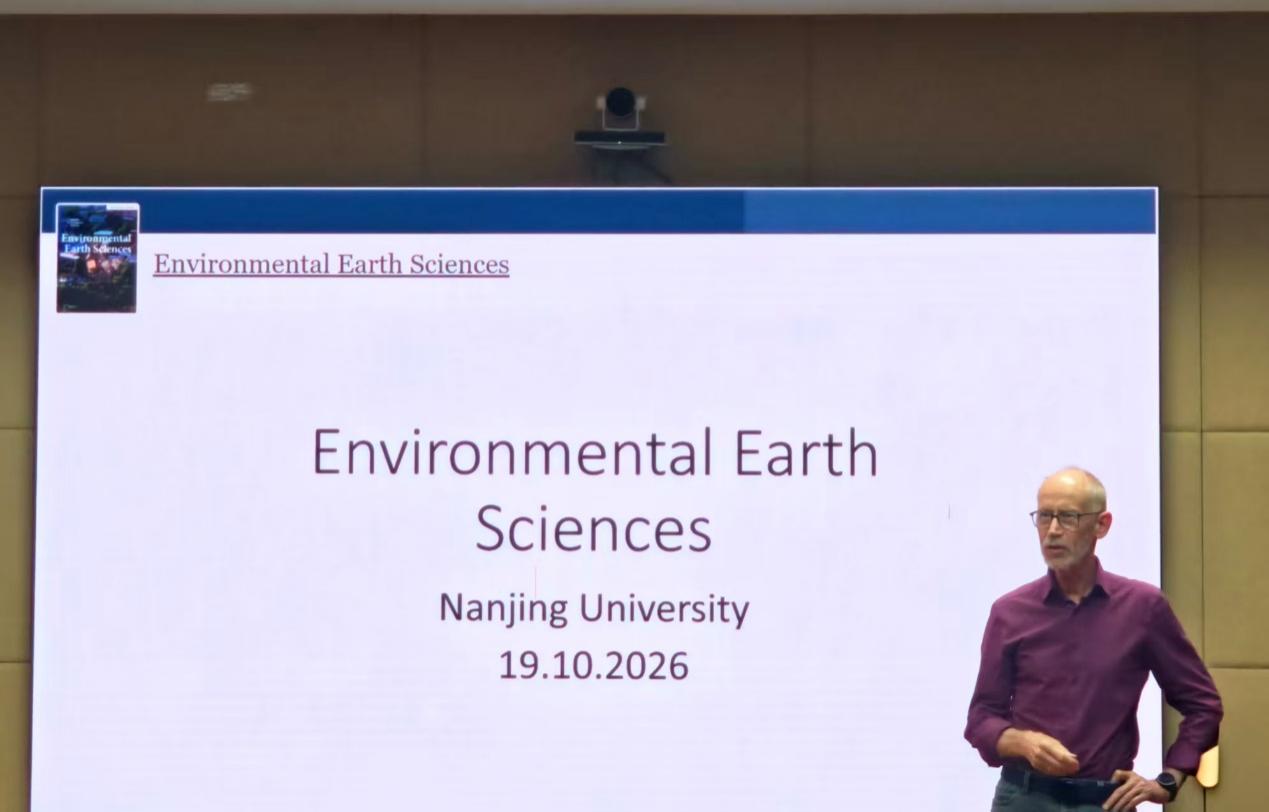
On the afternoon of October 19, 2026, at the invitation of Professor Tang Chaosheng of the School of Earth Sciences and Engineering, Nanjing University, Professor Olaf Kolditz of the Helmholtz Centre for Environmental Research (UFZ), Germany, and Keyuan Wang, Publisher at Springer Nature, visited Nanjing University and delivered an academic lecture entitled “Introduction to Environmental Earth Sciences” in Meeting Room A205 of the Zhugongshan Building. Teachers and master’s and doctoral students from relevant disciplines of the School attended the event.
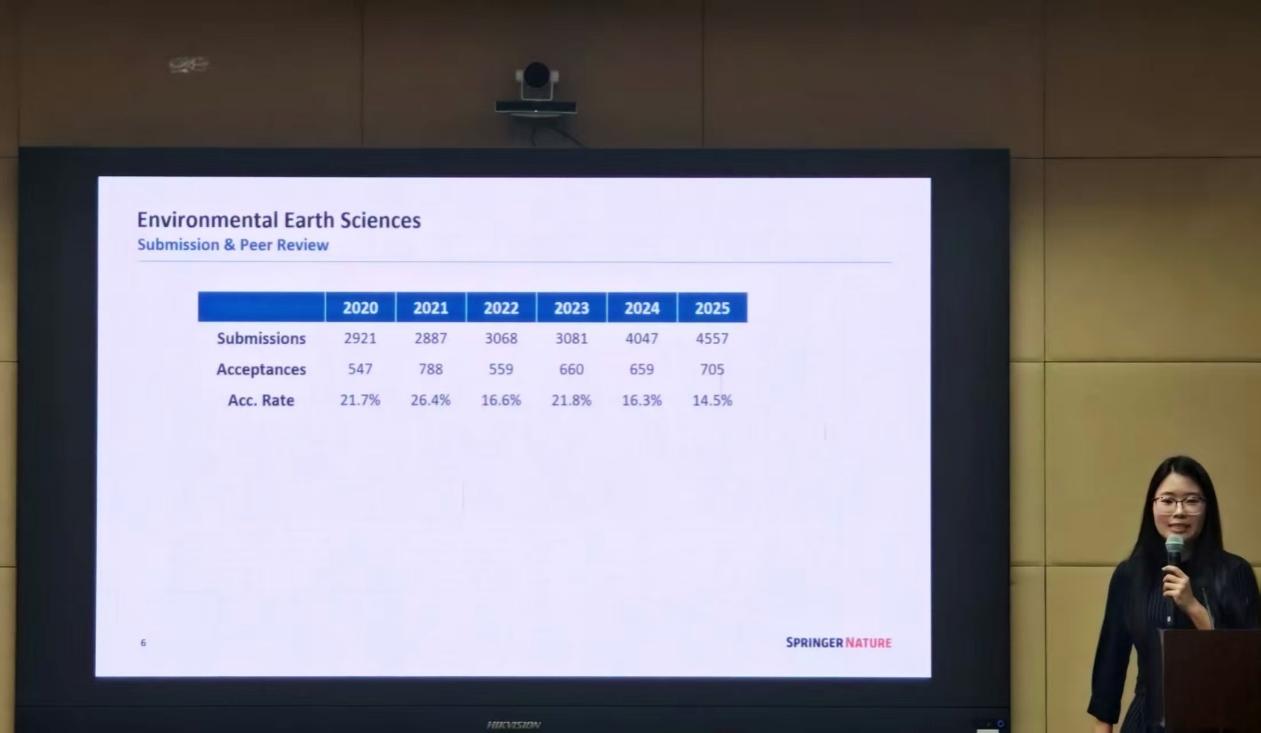
The lecture centered on the development history, research scope and academic publishing requirements of the international journal Environmental Earth Sciences (EES). Professor Olaf Kolditz, Editor-in-Chief of EES, began by introducing the journal’s editorial team, its main research fields, and its submission and publication record in recent years, with particular attention to the journal’s focus on the Earth system, geological hazards, environmental impacts and related research methods. Drawing on his editorial experience, he stressed the importance of high-quality scientific research and standardized manuscript writing, pointing out that researchers should fully understand the positioning of their target journal and the work it has already published, and should carefully organize the structure of their papers and their scientific argumentation in order to improve both the academic quality of their papers and their chances of acceptance.
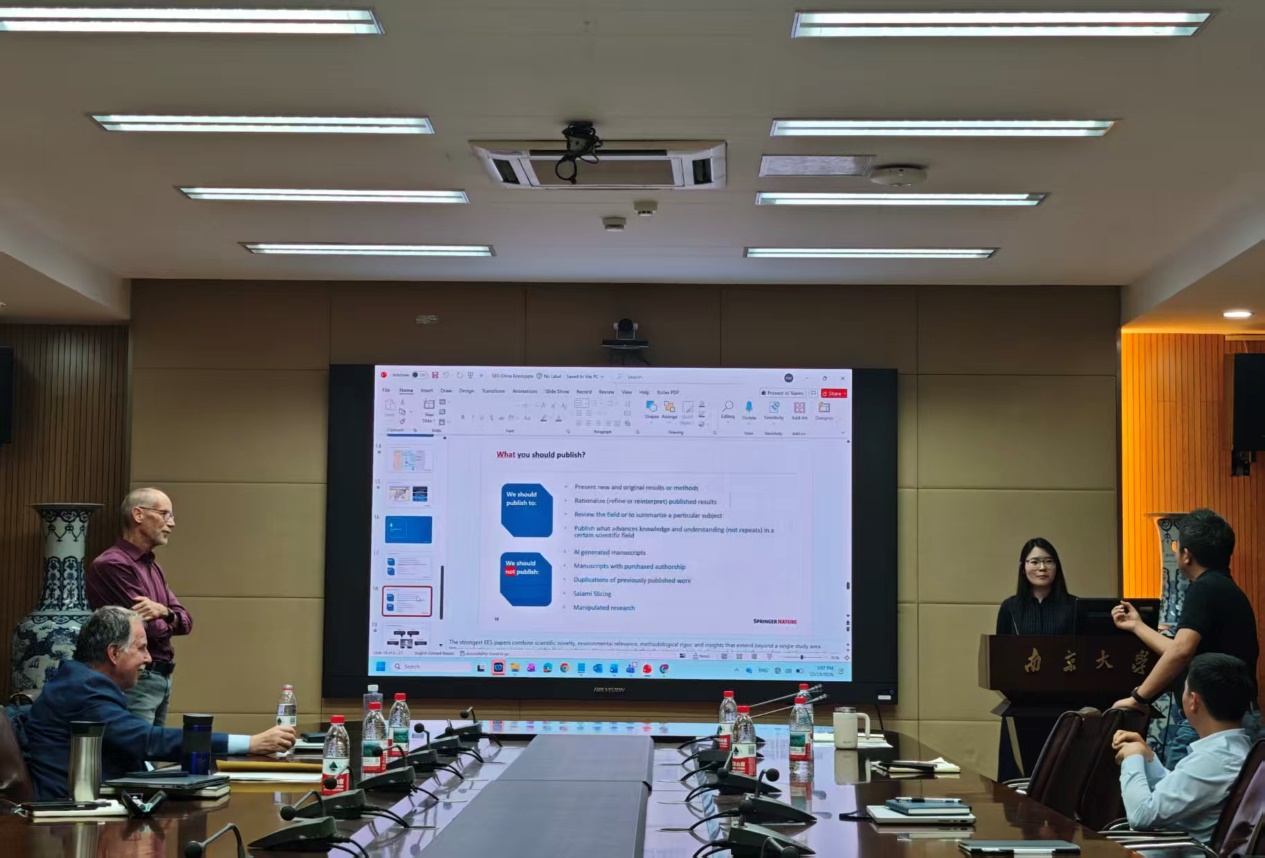
Keyuan Wang, Publisher at Springer Nature, then gave a systematic introduction from the publisher’s perspective, organized around four questions: what kind of journal EES is, what research results it mainly publishes, what process a manuscript goes through after submission, and how authors can improve their chances of acceptance. She reviewed the journal’s development since its launch in 1975 and its transition to a fully open access model, described its international growth, its academic influence and its manuscript handling process, and emphasized that peer review is an important step in promoting academic exchange and improving scientific research. On publishing papers, she noted that high-quality research should combine scientific novelty, environmental relevance, methodological rigor and broader scientific understanding, and advised authors to address four core questions in their writing — the necessity of the research, its content, its main findings and its academic contribution — so as to build a logically clear and persuasive scientific narrative.
After the lecture, the participating teachers and students held an in-depth discussion with the two speakers on issues including journal review timelines, the mechanism for inviting reviewers, the appropriate use of artificial intelligence in academic writing, open access publishing fees and academic evaluation systems. The two sides focused on the relationship between AI-assisted manuscript polishing and research integrity, the impact of the open access model on the dissemination of research results and on authors’ financial burden, and the relationship between journal impact factors, the number of published papers and actual academic contribution. Drawing on their experience in academic editing and publishing, the two speakers shared their views and emphasized that research should place greater weight on research quality, scientific innovation and the real dissemination value of results. The discussion was lively and engaging.
This academic exchange deepened the School’s teachers and students’ understanding of how international academic journals operate, how manuscripts are peer reviewed, and what high-quality academic publishing requires. It offered useful guidance for researchers seeking to improve their manuscript writing, to choose appropriate journals for submission and to expand their international academic exchange, and it also created favorable conditions for further exchange and cooperation between the School and international academic journals and publishing institutions.
About the Speakers
Olaf Kolditz is Professor and Head of the Department of Environmental Informatics at the Helmholtz Centre for Environmental Research (UFZ) in Germany, and holds the Chair of Applied Environmental Systems Analysis at TU Dresden, Germany. He serves as Editor-in-Chief of the international journals Environmental Earth Sciences and Geothermal Energy. His main research interests include environmental fluid mechanics, numerical methods and software engineering.
Keyuan Wang is a Publisher at Springer Nature. She graduated from the University of Science and Technology Beijing in 2019 with a master’s degree. She is currently responsible for the publishing operations and management of academic journals in the fields of Earth science and environmental science.