
Microbially induced calcium carbonate precipitation (MICP) is an innovative, nature-based soil improvement technology that holds great promise in areas such as soil reinforcement, seepage control, erosion prevention, and contaminated soil remediation. However, achieving homogeneous treatment remains a major challenge for MICP technology. To address this issue, an innovative approach has been proposed that utilizes electrokinetic technology to regulate the biomineralization process.
Since microbial surfaces typically carry negative charges, applying an electric field can effectively control the migration of microbes and charged ions, thereby regulating the calcium carbonate distribution. To reveal the underlying mechanisms of regulating bacterial migration and calcium carbonate distribution through electric fields, a microfluidic chip that simulates the pore structure of sandy soil was designed and fabricated. By observing the MICP reaction process in the microfluidic chip under an applied electric field through microscopy, the influence of the electric field on bacterial migration, calcium carbonate distribution, and crystal morphology characteristics was summarized.
Experimental results indicate that under the influence of the electric field, bacteria migrate towards the anode, while calcium ions accumulate at the cathode, ultimately leading to a significant precipitation of calcium carbonate near the cathode. Additionally, the calcium carbonate crystals precipitated under the electric field exhibit uneven sizes and increasingly complex crystal morphologies. Through microfluidic technology, this study reveals the mechanism of electric field regulation in biomineralization processes, providing new insights into using electric technology to control the microbially induced calcium carbonate precipitation process. These insights are expected to contribute to the optimized design of MICP technology in soil improvement applications.
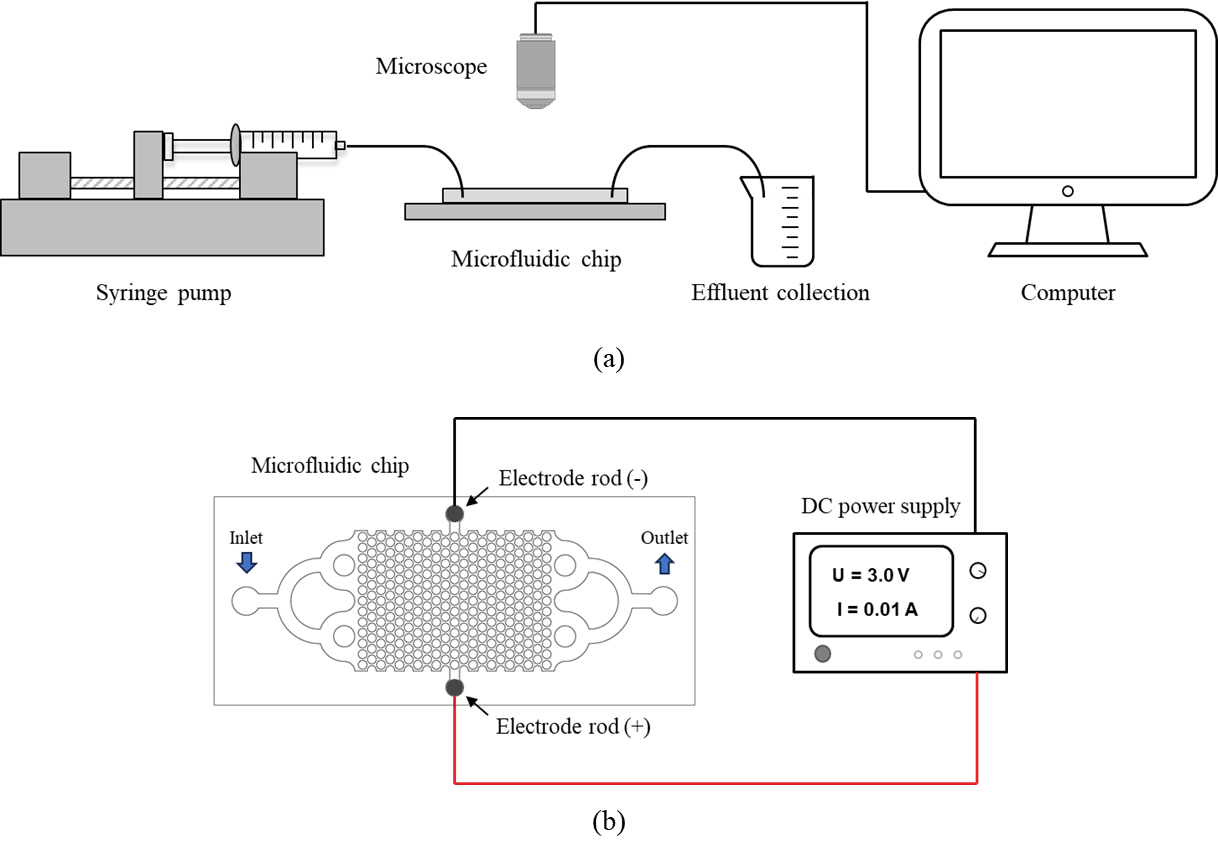
Fig. 1. (a) Microfluidic system; (b) Microfluidic chip with applied electric field
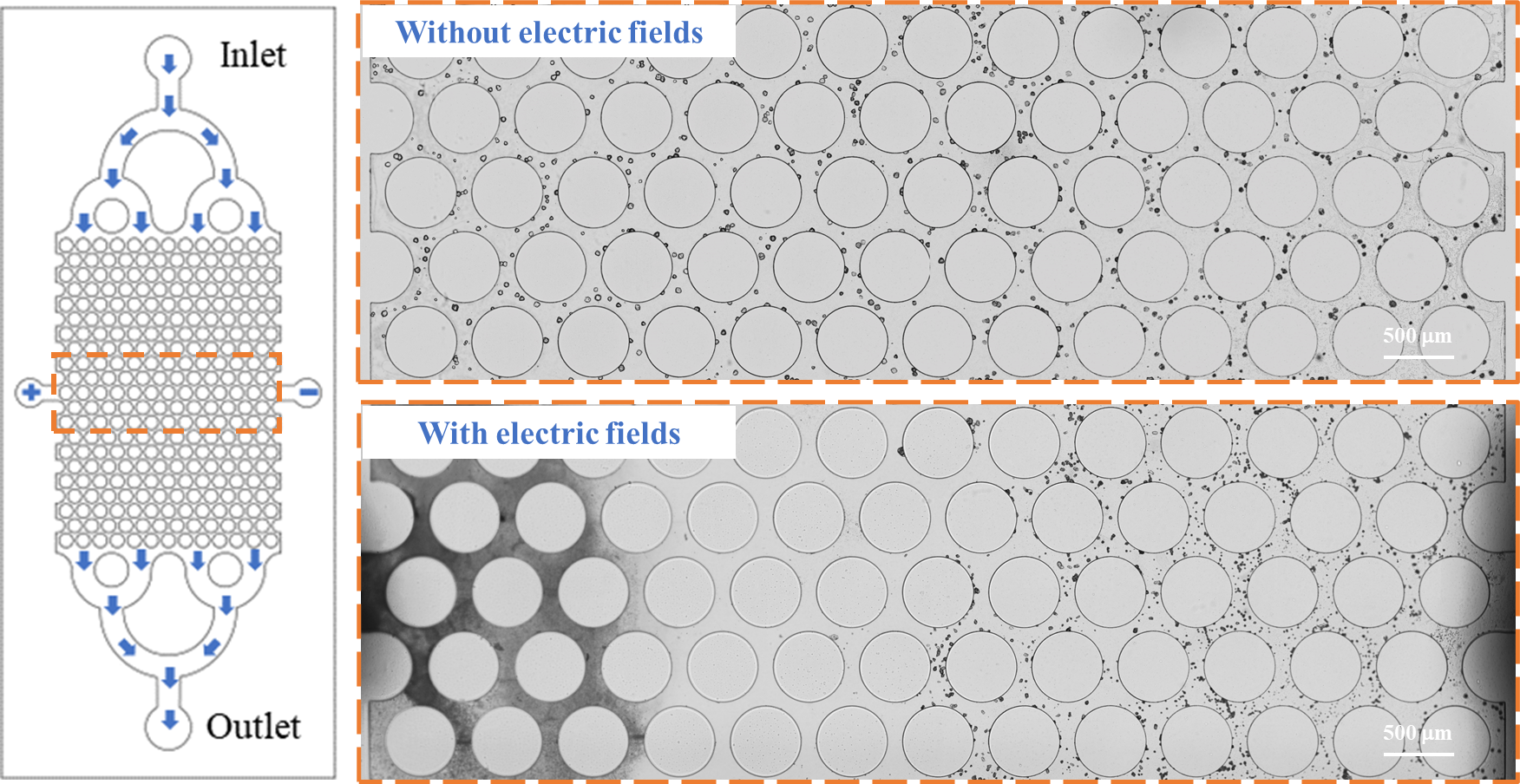
Fig. 2. Distribution of calcium carbonate in the microfluidic chip after MICP reaction under conditions with and without an electric field
The study was accepted by the Journal of Geotechnical and Geoenvironmental Engineering (Title: Regulating the Process of Microbially Induced Calcium Carbonate Precipitation through Applied Electric Fields: Evidence and Insights Using Microfluidics). Chao Lv (PhD candidate) is the first author of the paper, and Professor Chao-sheng Tang is the corresponding author. The research was supported by the National Natural Science Foundation of China, National Key Research and Development Program of China, Key Task Project for Joint Research and Development of the Yangtze River Delta Science and Technology Innovation Community, and Natural Science Foundation of Jiangsu Province.
Paper information:
Lv, C., Tang, C. S., Zhang, J. Z., Liu, H., & Pan, X. H. (2024). Regulating the Process of Microbially Induced Calcium Carbonate Precipitation through Applied Electric Fields: Evidence and Insights Using Microfluidics. Journal of Geotechnical and Geoenvironmental Engineering, 150(10), 04024087. https://doi.org/10.1061/JGGEFK.GTENG-12532