
New progress in the monitoring the dynamic of soil desiccation cracking
Drought-induced clayey soil desiccation cracking is a common natural phenomenon. The presence of cracks can significantly alter the mechanical and hydraulic properties of clayey soils, and cause a series of engineering problems or hazards.
Electrical resistivity tomography (ERT) is a sensitive and non-destructive technique capable of imaging the spatiotemporal resistivity variations in cracked soil. This study presents a novel ERT-based method integrating numerical modeling and experimental test to characterize the cracking morphology and quantify the cracking depth. Soil images synchronously taken record the crack morphology in the soil body during drying. Experimental results indicate the desiccation cracking patterns can be effectively reflected by the measured electrical resistance curves, implying that ERT can capture the subsurface soil cracking process. The relative variation rate of resistivity improves the accuracy of ERT in imaging the crack morphology. Furthermore, the cracking depths estimated using ERT are consistent with experimental observation.

Figure 1. Comparison of the crack morphology and the Rev distribution
between numerical modeling (a and b) and laboratory experiment (c and d)
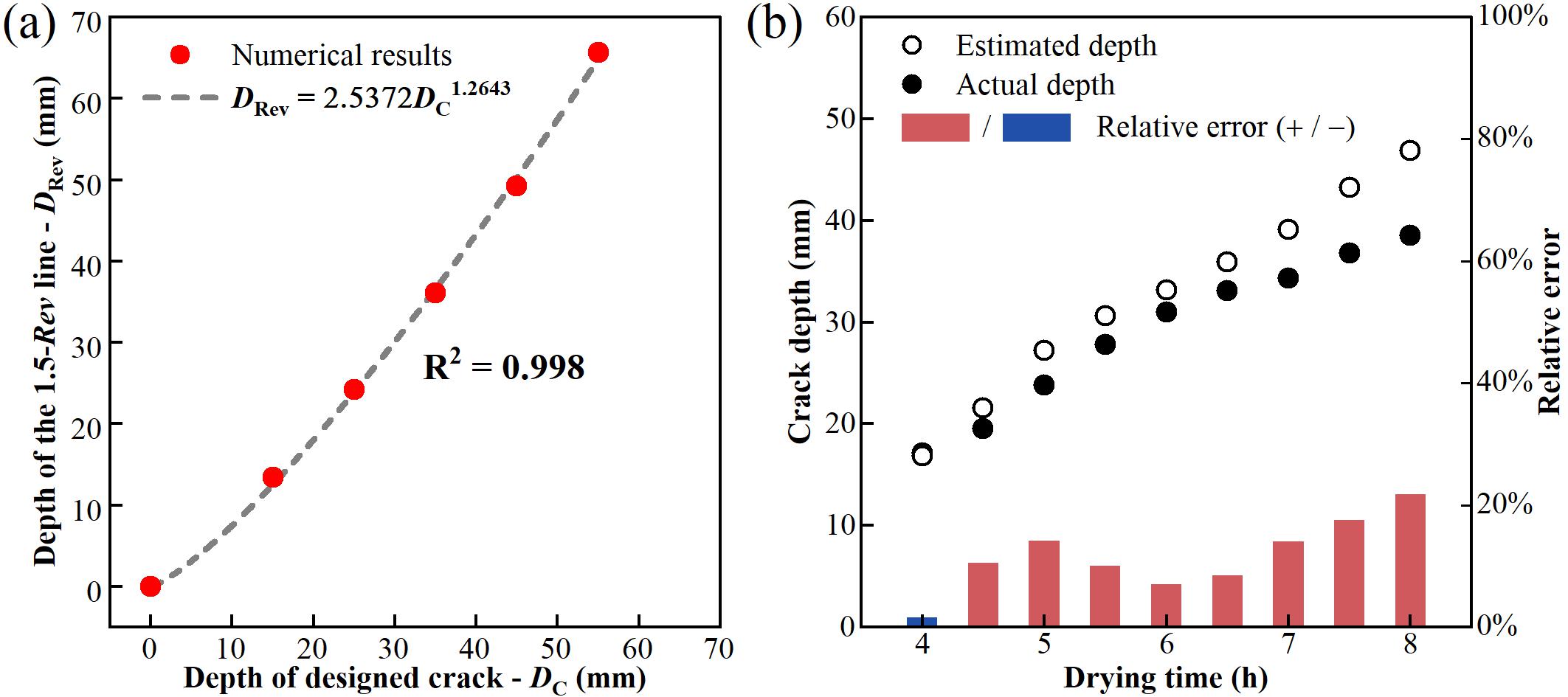
Figure 2. Comparing between the estimated crack depth and the actual
crack depth at different drying times and the corresponding relative errors
This study is expected to introduce a scheme based on ERT for monitoring the real-time evolution of clayey soil desiccation cracking and provide insights on managing and controlling the stability and performance of earth structures. The study was accepted by《Bulletin of Engineering Geology and the Environment》(Title: Monitoring and mapping the evolution of clayey soil desiccation cracking using electrical resistivity tomography). Jun-Zheng Zhang (PhD student) is the first author of the paper, and Professor Chao-Sheng Tang is the corresponding author. The work was supported by the National Natural Science Foundation of China, the Natural Science Foundation of Jiangsu Province and the Fundamental Research Funds for the Central Universities.