
New progress in the long-term performance on drought mitigation of soil slope through bio‐approach of MICP
Drought is a serious global environmental issue that causes water resource scarcity and threatens agriculture and food supplements. Long‐term soil drought can cause a series of environmental problems, including widespread vegetation mortality, reduced terrestrial carbon uptake, and even land degradation, soil salinization, and desertification. Moreover, drought‐induced soil desiccation cracks can further accelerate the evaporation rate, form preferential rainfall infiltration pathways, degrade soil physical and mechanical properties, and cause quite a few geological disasters such as landslides and debris flow. In light of this background, it is important to enhance soil water retention capacity and mitigate excessive soil moisture evaporation to alleviate the detrimental impacts of global soil drought.
In order to suppress excessive soil water evaporation and alleviate drought, an eco‐friendly technique‐microbial induced carbonate precipitation (MICP) was adopted. A field‐scale slope test which was lasted for 16 months was conducted. This is the first attempt to apply the MICP technique to reduce water evaporation of soil at field‐scale tests withstanding long‐term climate changes. The results show that MICP can significantly improve the drought mitigation capacity of soils, though it has a time‐dependent performance. After MICP treatment, soil performs a remarkable evaporation suppression ability and the evaporation rate can decrease by 50%. This is attributed to the soluble salts which increase soil water retention capability and dense hard crust which inhibits water vapor migration into the atmosphere. However, the soluble salts and crust are sensitive to weathering thus leading to degradation of MICP. Suffering 16‐month weathering, MICP-treated field soil exhibits weaker water retention capacity than untreated soil because MICP alters soil microstructure which expands macropores and decreases volume of micropores. Connected macropores act as favorable evaporation channels and accelerate evaporation. Periodical MICP treatments can be adopted to ensure MICP long‐term effects. Based on the quantitative results obtained from long-term in-situ monitoring and laboratory tests, we believe that the new ecological technology-MICP has great potential in improving the resilience of soil to climate change.
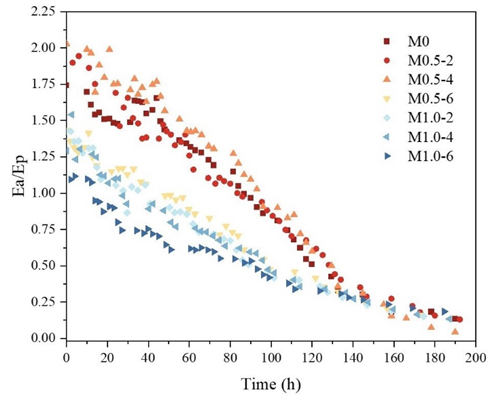
Figure 1. MICP reduced the evaporation rate of soil.
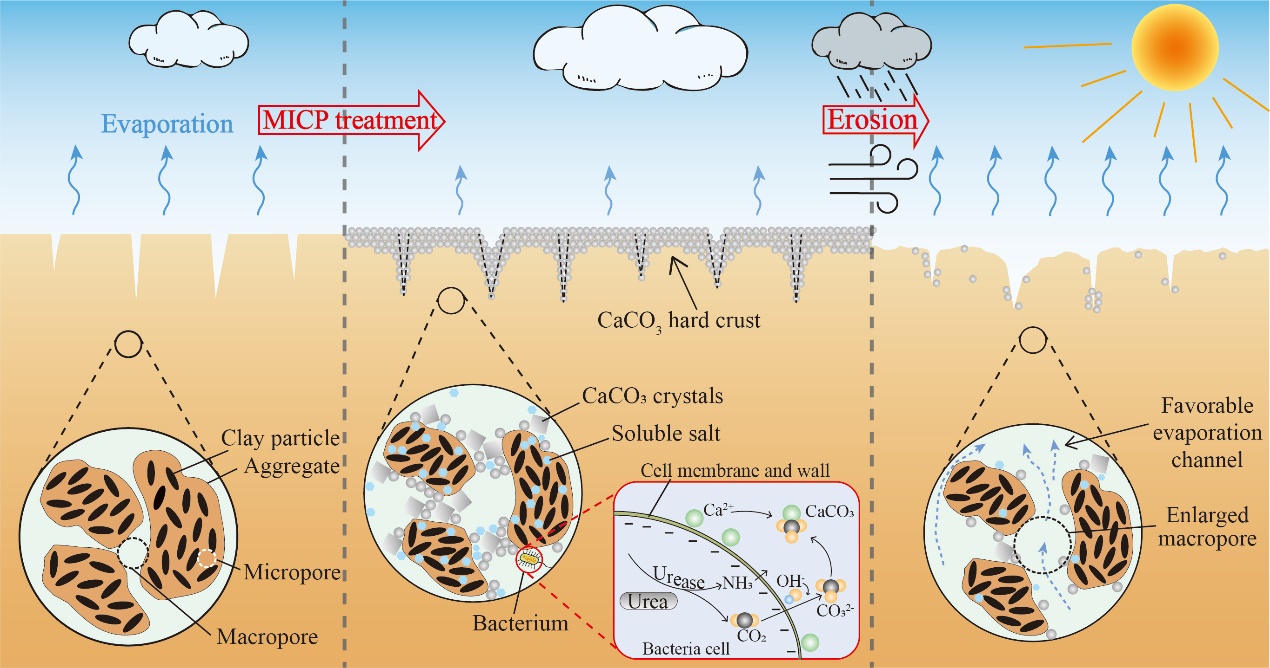
Figure 2. Schematic diagram of the process and the mechanism of long‐term performance on drought mitigation through MICP method.
This study validates the time‐dependent effects of MICP technique for long‐term drought mitigation and provides important experience for the in‐situ application of MICP technique. The study was accepted by “Water Resources Research” (Title: Long‐Term Performance on Drought Mitigation of Soil Slope Through Bio‐Approach of MICP: Evidence and Insight from Both Field and Laboratory Tests). Xin-Lun Ji (PhD candidate) is the first author of the paper, and Professor Chao-Sheng Tang and Associate Professor Xiao-Hua Pan are the corresponding authors. The work was supported by the National Natural Science Foundation of China, National Key Research and Development Program of China, Key task project for joint research and development of the Yangtze River Delta Science and Technology Innovation, Natural Science Foundation of Jiangsu Province and the Fundamental Research Funds for the Central Universities.
Paper information:
Ji, X.‐L., Tang, C.‐S., Pan, X.‐H., Cai, Z.‐L., Liu, B., & Wang, D.‐L. (2024). Long-term performance on drought mitigation of soil slope through bio‐approach of MICP: Evidence and Insight from Both Field and Laboratory Tests. Water Resources Research, 60, e2024WR037486. https://doi.org/10.1029/2024WR037486